
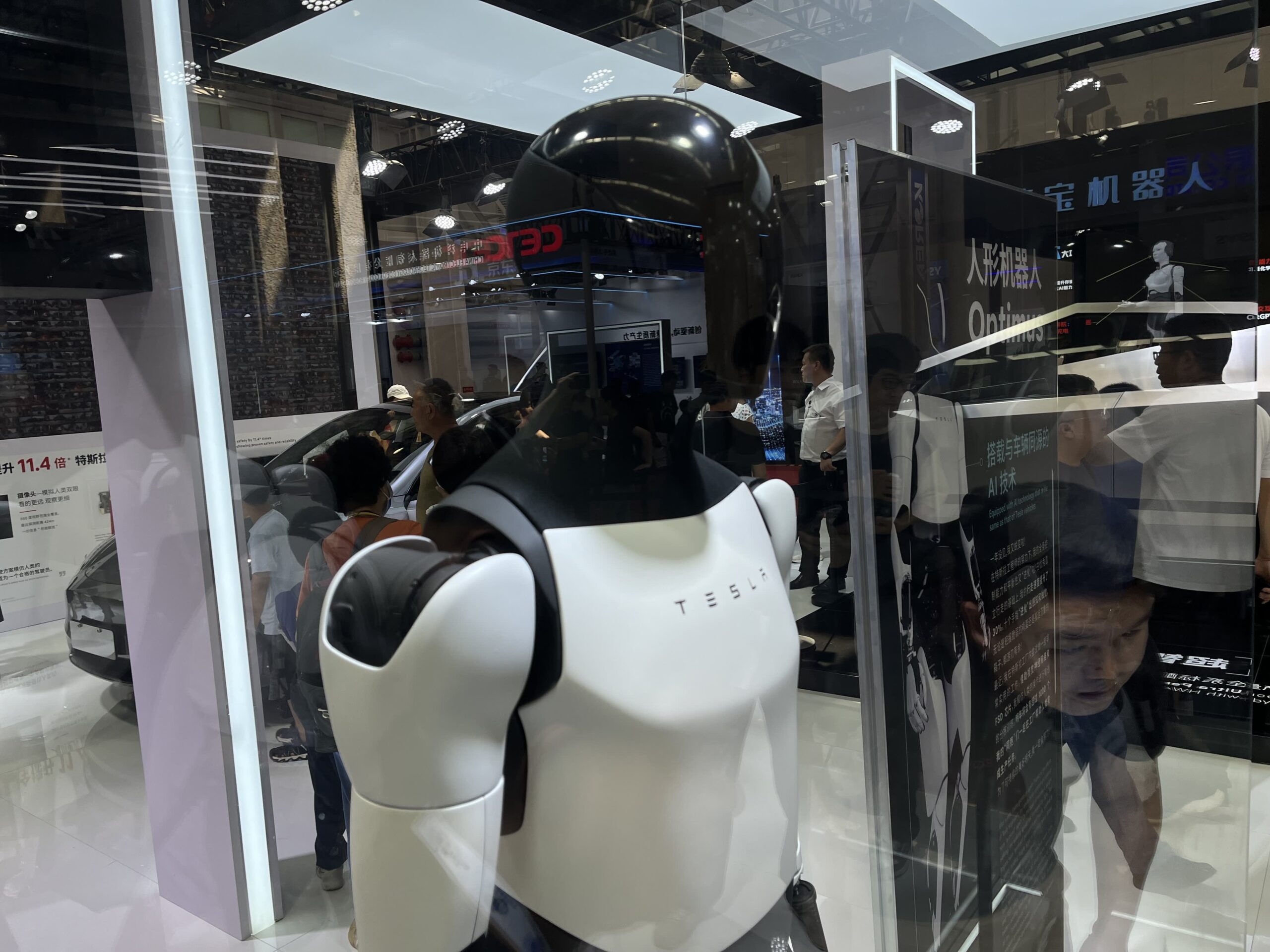
Elon Musk is stressing robots over cars. Here are three humanoid parts suppliers that Morgan Stanley recommends

The race is on to make humanoid robots. Elon Musk announced Wednesday that Tesla is shutting down production of two electric car models and converting a California plant to build the Optimus robot . But while Tesla tries to get up to speed, rivals in China have already ramped up deliveries and entered talks for global partnerships in humanoid development . The result is growing demand for parts. “Component suppliers will be first to profit from the industry’s nascent growth,” Morgan Stanley analysts said in a Jan. 21 report, ahead of Musk’s announcement. Production over sales “Production is likely to be materially larger than sales at this stage,” the investment bank’s analysts said, “as the major players are producing robots internally for training and verification, indicating the component market could reach scalable production earlier than previously thought.” Shanghai-listed Leaderdrive, one of Morgan Stanley’s preferred humanoid parts stocks, closed more than 7.5% higher Friday after slight gains Thursday. The robotics company late Thursday preannounced that 2025 net profit more than doubled to at least 58.8 million yuan ($8.46 million). Leaderdrive said in a filing that in the “smart robot” sector, leading clients are moving from the research stage to small-scale production, adding that that it is deepening talks with unnamed overseas partners. “Leaderdrive is expected to benefit most from humanoids,” the Morgan Stanley analysts said, predicting the company will generate 30% of its revenue next year from robots, up from 25% in 2026 and 15% last year. Forecast doubled Morgan Stanley in January doubled its forecast for China humanoid sales this year, to 28,000 units, up from 14,000 predicted as recently as December. Musk said at the World Economic Forum in Davos, Switzerland this month that he plans to sell Optimus robots to the public by the end of 2027, and plans to ultimately produce 1 million humanoid robots a year. Morgan Stanley’s other preferred humanoid components stocks include Shenzhen-listed Inovance Technology . With a large industrial automation business, humanoids won’t form a significant part of Inovance revenue this year or next, according to Morgan Stanley estimates. But the analysts point out that to capture future market potential, Inovance is developing specialized screw and linear actuator mechanical parts for humanoids. Linear actuators convert rotational motion into linear motion, and vice versa. “Humanoid robots using linear+rotary solutions will gradually launch in 2026/27 (Tesla Optimus, Xpeng Iron ),” the Morgan Stanley report said. “As linear actuators tend to be more affordable, we expect an increase in adoption going forward.” Jiangsu Hengli Hydraulic , a Shanghai-listed company that focuses on screws, is another company Morgan Stanley analysts expect can benefit from humanoid robot demand. The sector already accounted for 1% of Hengli’s revenue this year, and will likely rise to 2% next year, according to the report. Despite growing popularity of humanoids for entertainment, such as boxing matches and tech exhibitions, the technology is still in its early stages, and it’s unclear whether their development will face additional regulation for public use, or which humanoid companies will survive. But progress on Tesla’s Optimus has been a key driver for stock performance of Chinese humanoid parts companies over the past 12 months, the Morgan Stanley report said. Reports of Optimus delays led robot parts makers to sell off, they said. A Wind Information index of 110 Chinese robot component makers fell more than 2% Thursday before closing higher Friday. But the index is up nearly 48% over the past 12 months, outperforming the broad market CSI 300 index that’s up about 25% in the same time.