
PM pledges reforms to woo investors
4-point plan targets long-term growth
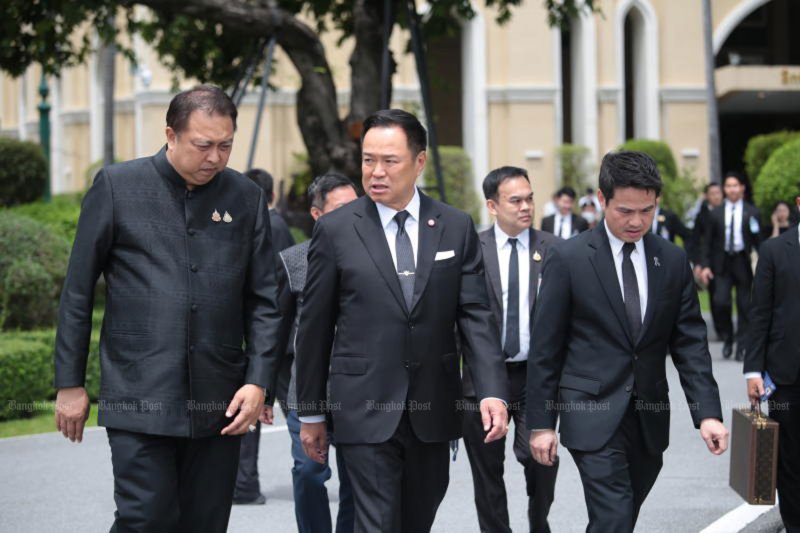
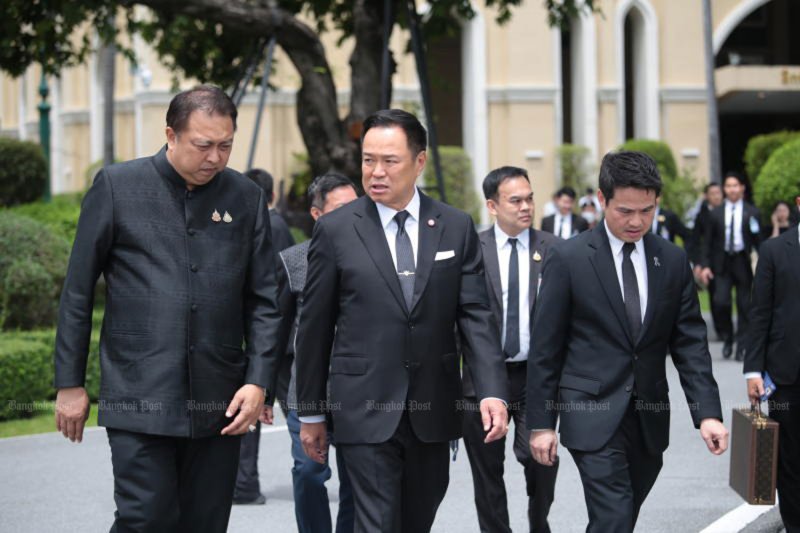
Prime Minister Anutin Chanvirakul has pledged regulatory and economic reforms to secure Thailand’s position as a long-term investment destination.
Mr Anutin recently attended the Joint Foreign Chambers of Commerce in Thailand (JFCCT) Prime Minister’s Address Luncheon 2026, which drew around 400 attendees, including ministers, chairmen of foreign chambers of commerce, business representatives, and ambassadors from JFCCT member countries. During the event, the prime minister delivered a keynote address titled “Thailand 2026: A Vision for Competitiveness, Investment and a Future-Ready Economy: From Uncertainty to Confidence — Reform and Resilience in Business.”
Mr Anutin said recent engagements with global business leaders have repeatedly underscored “uncertainty” as a defining feature of the current economic climate, driven by shifts in global supply chains, rapid technological change and rising geopolitical tensions, all of which are affecting investment decisions worldwide.
He noted that the Thai government is well aware that a country’s competitiveness is measured not only by costs but also by its ability to adapt to the changing global economic landscape.
He outlined his administration’s four key strategies to drive Thailand’s economy forward.
First, the government is positioning Thailand as a more business-friendly destination through regulatory reforms, expanded digital public services, streamlined investment procedures and stronger coordination among government agencies.
He highlighted the Thailand FastPass mechanism, which accelerates investment approvals and licensing procedures. So far, 25 projects, worth more than 223 billion baht, have benefited from the initiative. The government is also reviewing business-related laws to reduce unnecessary restrictions and improve the investment climate.
Second, Thailand is investing in future industries, including advanced electronics, semiconductors, artificial intelligence (AI), digital services, and clean energy, aiming to become a regional hub for next-generation industries.
Third, the government is prioritising human resource development alongside technological advancement.
Mr Anutin said AI’s benefits can be fully realised only when supported by a skilled and adaptable workforce. To achieve this, his administration is strengthening cooperation among public agencies, educational institutions and the private sector to develop talent that meets future industry needs.
Fourth, he said Thailand is deepening its integration with the global economy. With Asean remaining one of the world’s fastest-growing regions, Thailand’s strategic location provides a key advantage in trade connectivity, investment and supply chains.
He added that the government is pursuing high-standard trade agreements, including negotiations for a Thailand–European Union Free Trade Agreement, while advancing plans to establish Thailand as Asean’s logistics hub. He also highlighted Thailand’s ambition to join the Organisation for Economic Co-operation and Development (OECD).
Source – Bangkok News