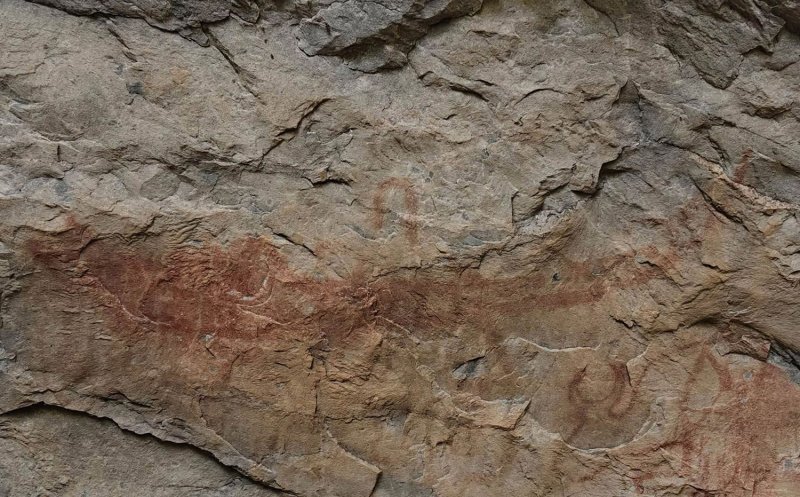
Ancient rock paintings discovered in Nong Bua Lamphu cave
NONG BUA LAMPHU – Fine Arts officials have inspected newly found rock paintings believed to be around 4,000 years old in a cave behind a forest monastery in Na Wang district of this northeastern province, in what archaeologists say could be an important addition to Thailand’s prehistoric heritage.
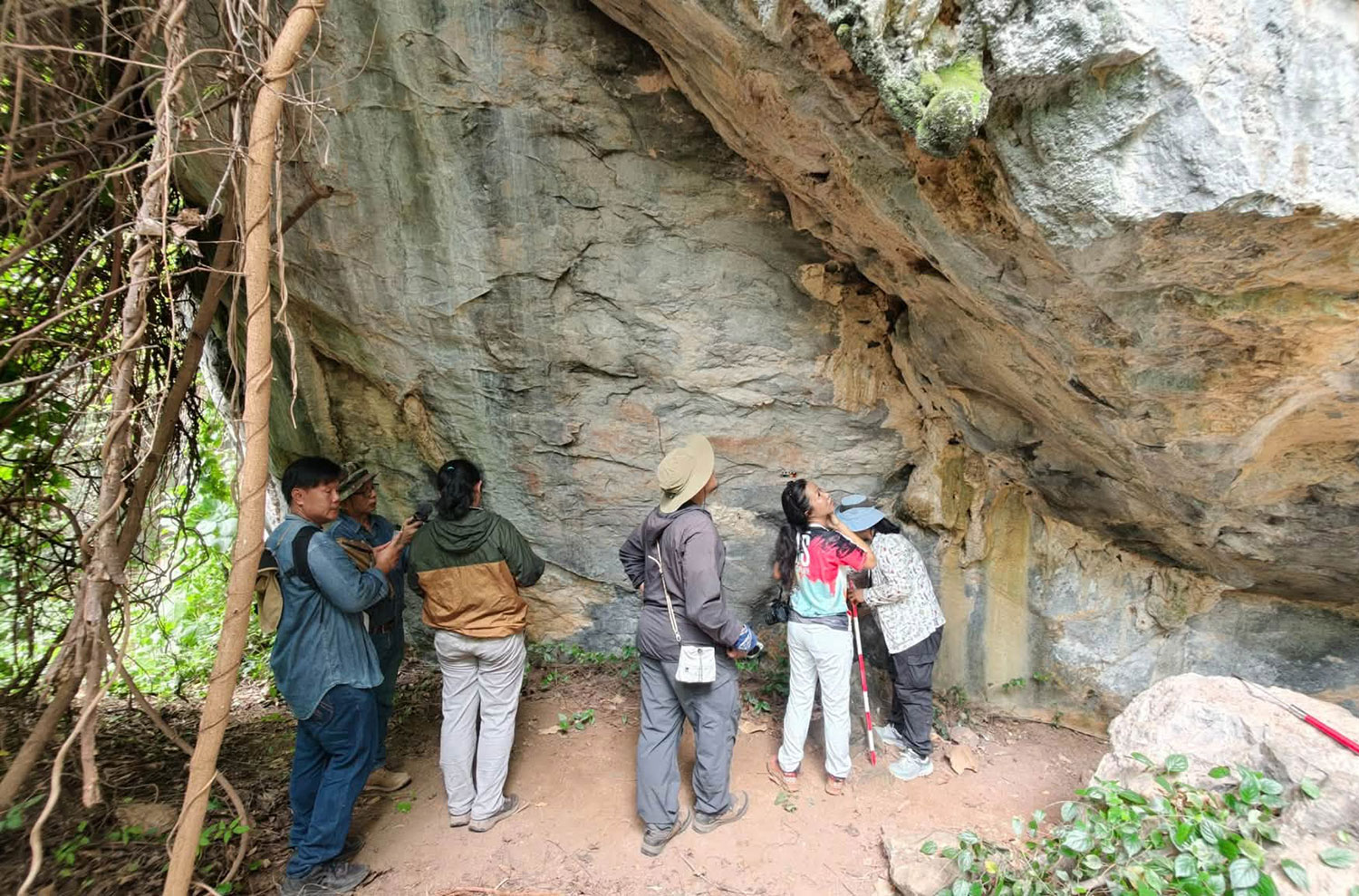
The paintings were documented during a survey on Friday led by Tippawan Wongassapaiboon, an archaeologist with the Fine Arts Department’s 8th Regional Office in Khon Kaen. It followed reports of previously unknown rock art being found in Pha Wiang Cave, located behind Wat Tham Pha Wiang in tambon Na Kae.
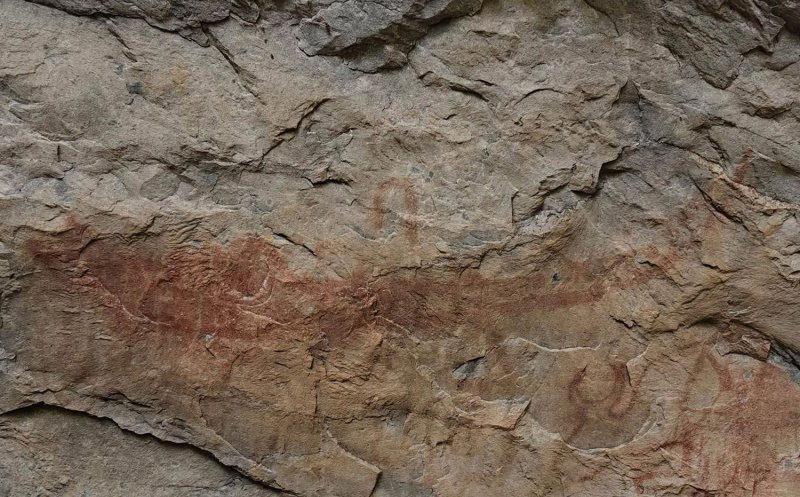
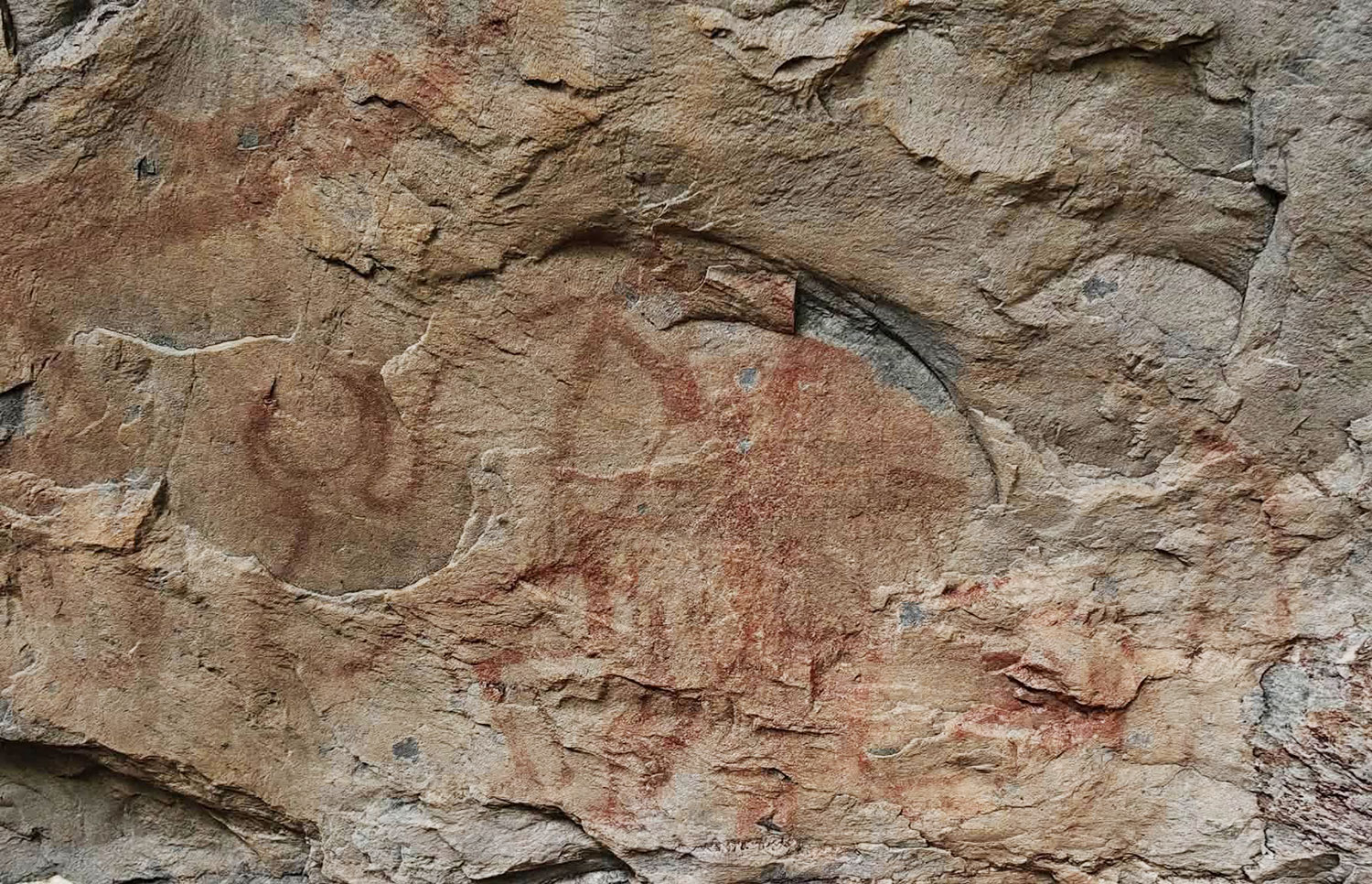
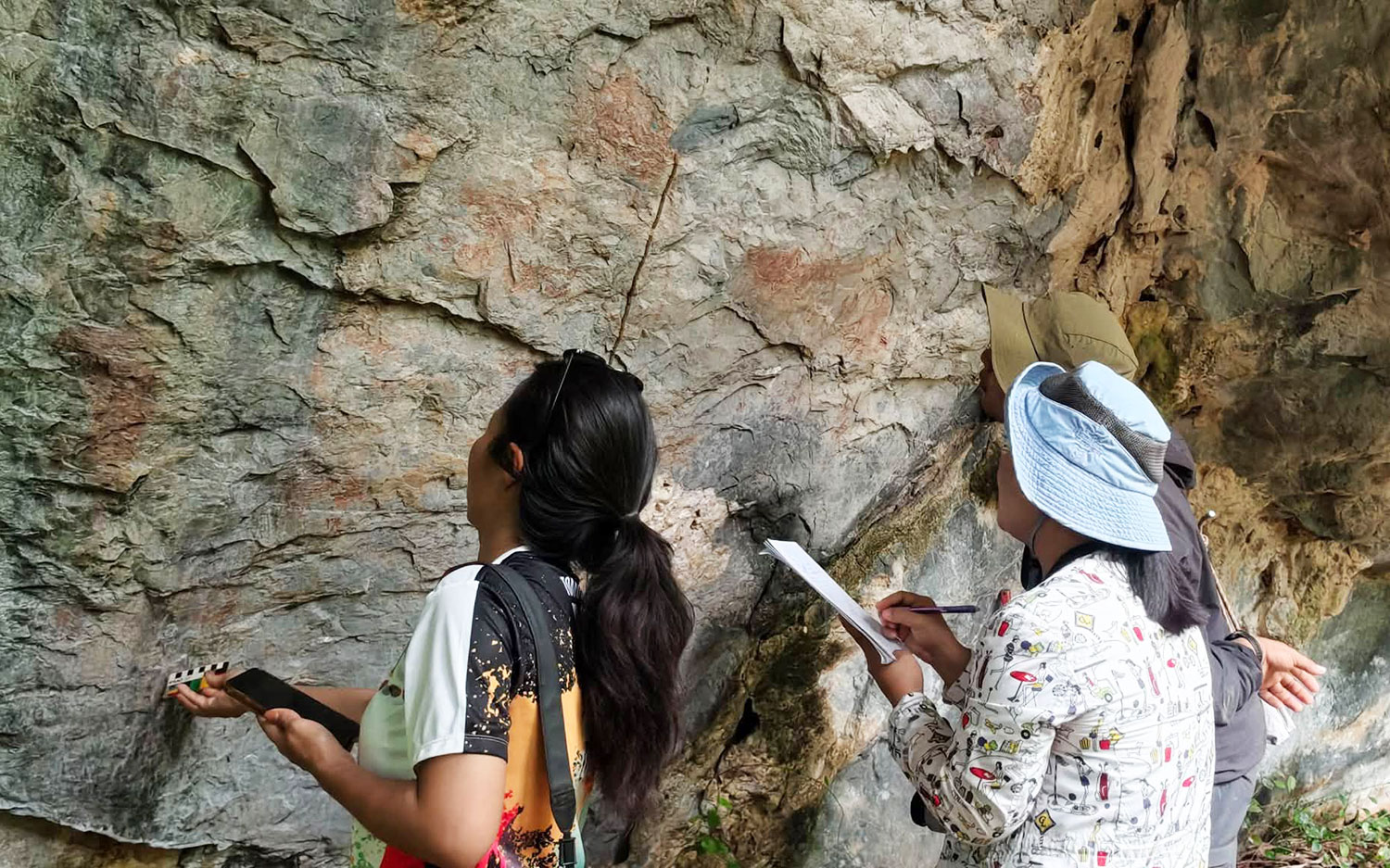
The paintings are on a rock face near the entrance to Thammart Cave, a smaller cave opposite the monastery’s main Pha Wiang Cave. Using image-enhancement software and on-site analysis, archaeologists identified several prehistoric red paintings, including four monkeys climbing vines and a gaur depicted below them.
Researchers also found evidence of at least two later phases of painting superimposed over the original images, along with two handprints believed to have been left by an adult and a child.
Ms Tippawan said the artwork may reflect what prehistoric communities encountered in their daily lives, including wild animals, hunting practices and ritual activities. She said the cave wall may have served as a place where hunting knowledge and survival skills were passed down between generations.
“The handprints may have been part of ancient rituals or a way for people to mark their presence at the site. In today’s terms, it would be similar to checking in at a location,” she said. (Story continues below)
– Clues to a wider prehistoric network –
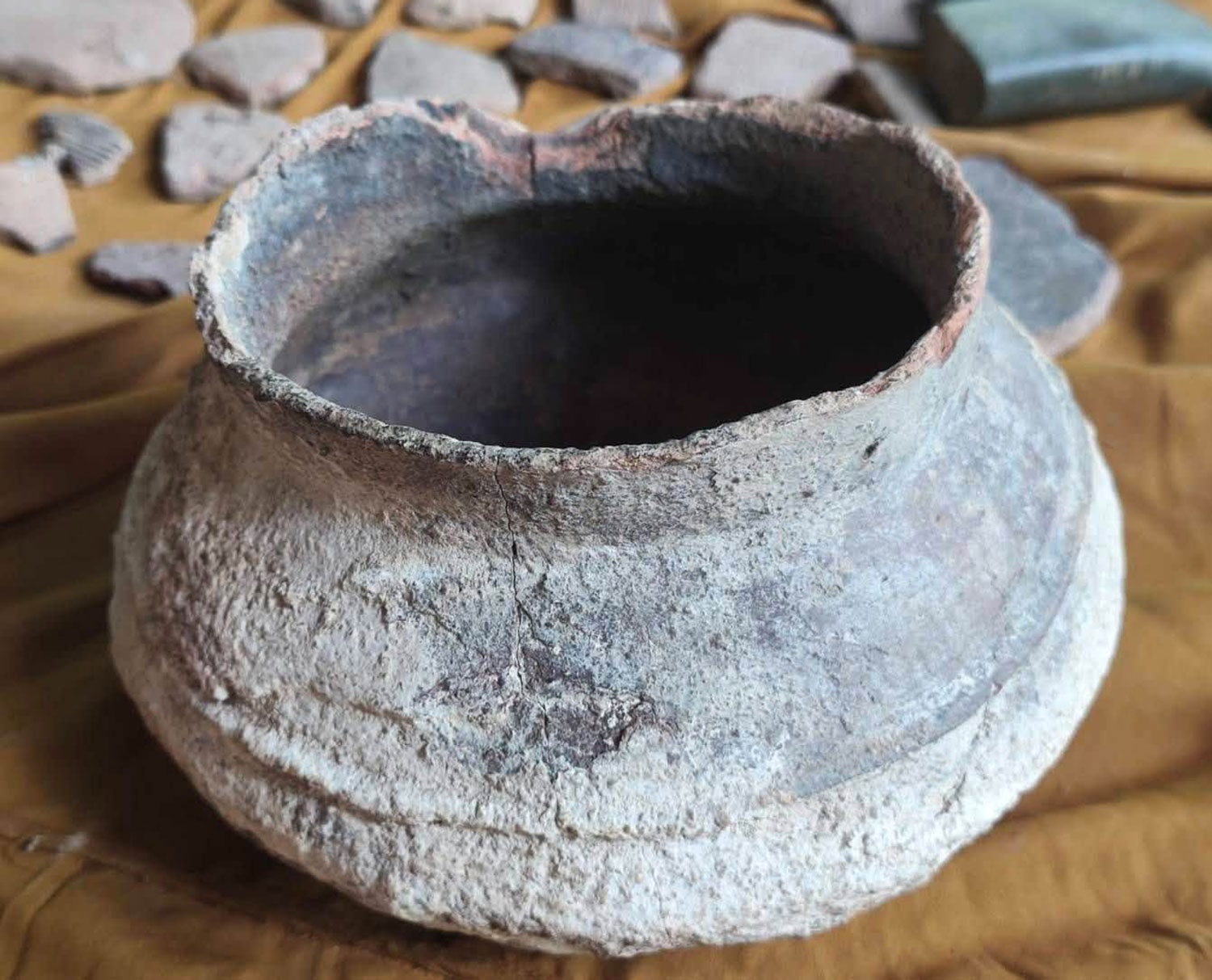
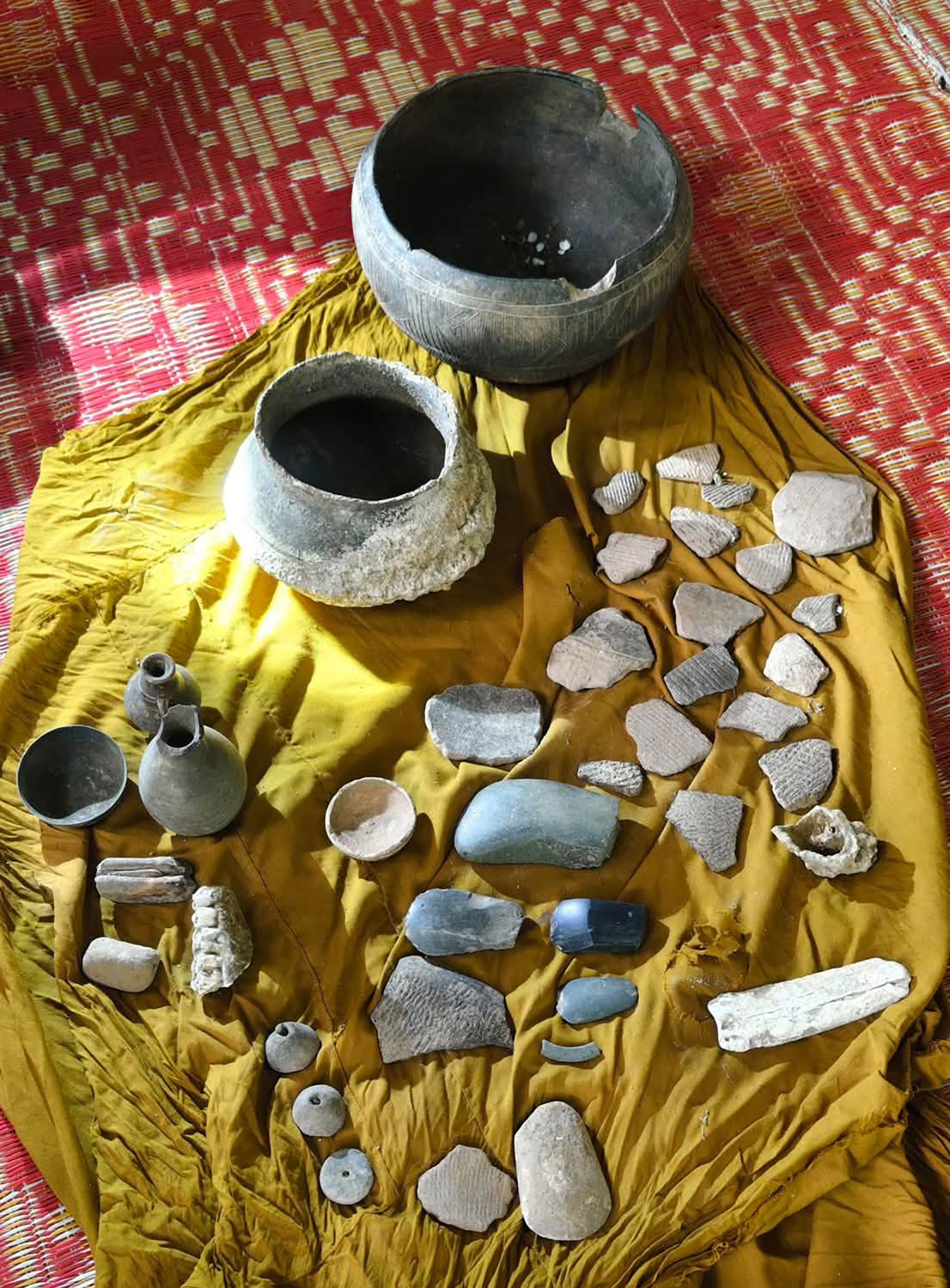
The survey also uncovered fragments of pottery decorated with incised patterns similar to artefacts found at the Unesco World Heritage site of Ban Chiang in neighbouring Udon Thani province. Archaeologists believe the discovery could help trace links among prehistoric communities across what is now upper northeastern Thailand, from Loei province through Phu Phra Bat Historical Park in Udon Thani, with Pha Wiang potentially serving as an important point along an ancient cultural route.
Ms Tippawan said visitors must not touch the paintings or remove any artefacts from the area. “A single object can tell us a great deal about the past. If evidence is lost, important archaeological information may disappear with it,” she said.
The site is being considered for further study and possible registration as an archaeological site.
– Artefacts collection –
Phra Khru Wichai Phatthanakit, abbot of Wat Tham Pha Wiang, has collected and preserved numerous artefacts found in nearby caves, including decorated pottery, ancient jars, polished stone axes, beads and large bone fragments, to prevent them from being lost or illegally removed.
Officials are expected to return for a more detailed examination of the finds, which could yield further insights into prehistoric life in the region.
Source – Bangkok News