
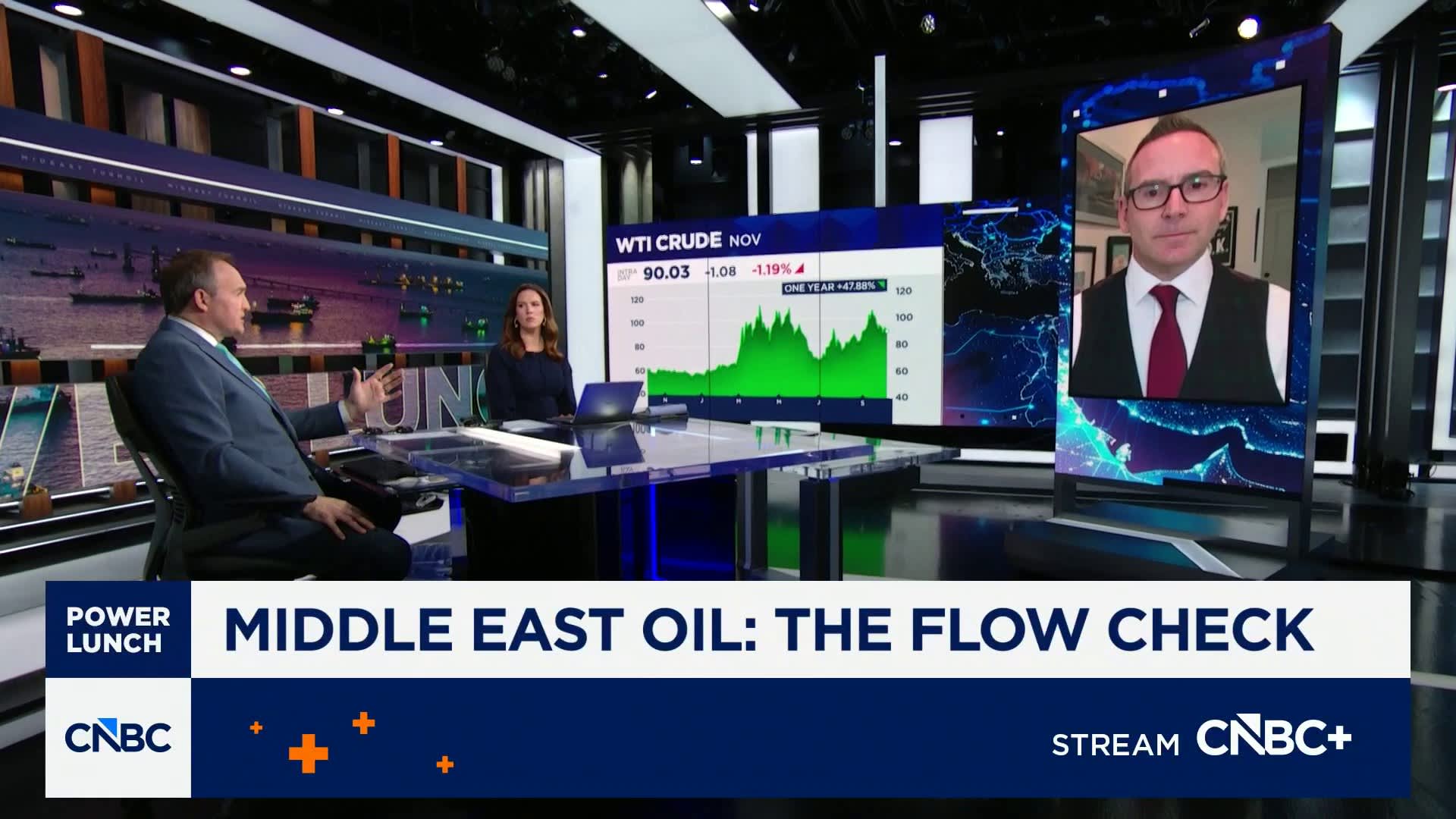
Rebounding oil exports through Strait of Hormuz are vulnerable to stepped-up Iranian tanker attacks

Iran has stepped up its attacks on tankers transiting the Strait of Hormuz, threatening a fragile rebound of crude oil exports from the Persian Gulf.
Nearly 20 commercial ships, mostly tankers, have come under attack over the past month while sailing through Hormuz, the Persian Gulf or off the coast of Oman, according to the Joint Maritime Information Center, a group of U.S.-allied militaries that provide security updates to merchant vessels.
Iran attacked roughly two ships for every 100 vessels that crossed the strait in the third quarter, said Michelle Wiese Bockmann, senior maritime intelligence analyst at Windward, which tracks ships for defense departments and governments.
Oil flows through Hormuz now depend on a major U.S. military commitment to protect tankers transiting along a southern route along the coast of Oman.
With the security situation in Hormuz still dangerous, it is unclear how long the rebound in crude exports can be sustained in the absence of a negotiated settlement or capitulation by Tehran.
Shuttle system
In many cases, tankers are bringing crude through Hormuz and then transferring the oil onto ships in the Gulf of Oman that haul it to Asia. This shuttle system reduces the exposure to attack from Iran but also requires more vessels to move the oil.
“Nobody in Washington thinks this is sustainable financially,” said Bob McNally, president of Rapidan Energy and a former energy advisor to President George W. Bush, referring to the U.S. military commitment in the Gulf, ship-to-ship transfers and heightened tanker rates. “It’s an inefficient way to move commodities, not just oil, out of Hormuz,” McNally said.
Crude oil shipments through Hormuz fluctuate daily, sometimes matching or even exceeding levels before the Iran war, according to data from Kpler, a firm that tracks tankers and global trade flows.
At other times, exports are lower than volumes seen before the conflict. Shipments averaged about 10.3 million barrels per day for the week ended Saturday, about 23% below a prewar baseline of 13.5 million bpd, according to Kpler data published Monday.
Windward estimates crude through Hormuz is averaging 9-10 million bpd compared with a prewar baseline of 14.5 million bpd.
While crude flows are volatile, they have ramped up compared with earlier in the war as the U.S. military has successfully carved out the shipping route along Oman’s coast, analysts say.
High costs
But shippers are ferrying crude through Hormuz at high cost to the lives of their crews and in freight and insurance rates, Bockmann said. Since July, at least nine sailors have died, 18 injured and three are missing, according to the International Maritime Organization, a United Nations agency.
“Volumes are getting through but they’re getting through at a time of extremely high maritime risk,” Bockmann said. As security has deteriorated, the cost of shipping crude from the Persian Gulf to China has skyrocketed to $1 million per day for each tanker.
“Oil flows have recovered because the market participants have accepted greater operational complexity and higher costs,” said Richard Meade, editor in chief of Lloyd’s List, a London-based maritime industry trade publication, in a briefing last Thursday.
But the threat to tankers remains the same, Meade said. Brent oil prices, the international benchmark, are still hovering near $100 per barrel, even as more crude makes it out of Hormuz.
“If the market believed that this was sustainable, I think you would be seeing much lower prices,” McNally at Rapidan said. Prices remain high because “it’s still costly to deliver and insure and land crude in consuming regions where benchmark prices are set,” he said.
And while more oil is getting out, freedom of navigation in Hormuz has not been restored, McNally said. Tehran continues to insist that it controls the strait.
Iran’s Revolutionary Guard on Monday hailed down a tanker transiting the strait and ordered the ship to turn around or face attack, according to an incident report from the United Kingdom Maritime Trade Operations Centre. The vessel complied.
“The oil market is not becoming more secure,” Meade said. “It is becoming more efficient at operating under sustained insecurity.”
Source – Middle east monitor