
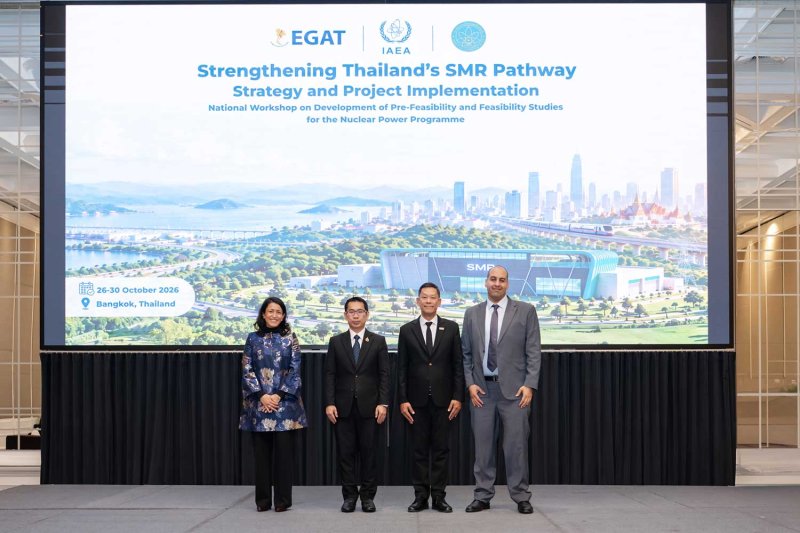
Nuclear study accelerated in bid to install reactors by 2037
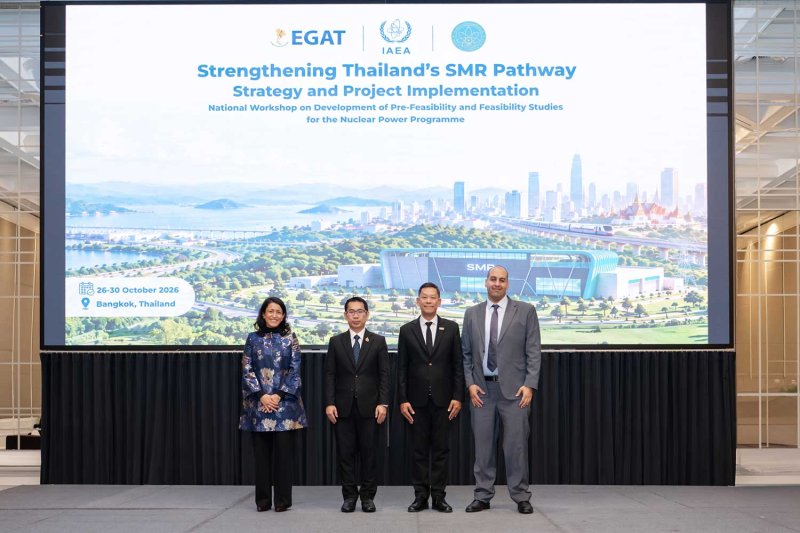
The Electricity Generating Authority of Thailand (Egat) has accelerated a study on nuclear energy adoption, setting a target to launch Thailand’s first commercial small modular reactor (SMR) by 2037.
The initiative forms a core part of the nation’s 2026 Power Development Plan, aiming to secure clean, stable energy while mitigating exposure to volatile global liquefied natural gas prices.
According to Siriwat Chedsi, Egat’s deputy governor for power plant development and renewable energy, the agency has commenced a pre-feasibility study to evaluate prospective technologies and potential construction sites.
He said the SMR project has a planned generation capacity of 300 megawatts (MW) and was expected to initiate commercial operations in 2037.
Capital expenditure has been projected at 60-70 billion baht.
Although upfront capital investment costs are higher than traditional fossil-fuel plants, SMRs feature an extended operating lifespan of 60-70 years — roughly triple the lifespan of a standard natural gas plant.
This durability offsets initial expenses, promising more stable long-term electricity tariffs and lower lifetime generation costs, according to the deputy governor.
“SMRs are widely regarded around the world as a promising and reliable source of low-carbon electricity,” said Mr Siriwat during the Strengthening Thailand’s SMR Pathway: Strategy and Project Implementation conference, co-organised on Oct 26 by Egat and the International Atomic Energy Agency (IAEA).
The event was aimed to enhance understanding of SMR technology among Thailand’s energy agencies as the country prepares for the potential deployment of SMR power plants.
“We are committed to ensuring that Thailand systematically develop knowledge and institutional capabilities. This is essential for evaluating all appropriate energy options and supporting well-informed decision-making,” said Sompop Pattanariyankool, deputy permanent secretary at the Energy Ministry, who presided over the conference.
Egat has been working closely with IAEA to align safety standards, technology selection, and regulatory frameworks with global best practices.
Mr Siriwat said site selection for project development and safety standards will be evaluated following strict IAEA guidelines prioritising safety, seismic stability and abundant water resources for cooling infrastructure.
While the Eastern Economic Corridor has been placed under preliminary review as a high-potential zone due to heavy industrial power demand, final site determinations depend heavily on forthcoming consultant recommendations and environmental risk assessments.
To oversee the nuclear programme transparently, Egat plans to propose the establishment of a dedicated Nuclear Energy Programme Implementing Organisation whose function would be similar to an atomic regulatory body, in coordination with the Energy Ministry and the Ministry of Higher Education, Science, Research and Innovation.
Recognising public sensitivities around nuclear energy, Egat has prioritised transparent communication and public outreach, beginning with governmental alignment before expanding community-level education campaigns in potential host regions.
With global energy markets fluctuating, Egat views SMR technology as a strategic bridge toward Thailand’s long-term carbon neutrality goals, offering continuous 24-hour power generation to support future industrial demands, data centres and electric vehicle infrastructure.
Nateekul Kriangchaiporn, Egat’s head for the SMR power plant preparation project, said that after the first SMR operates, Thailand is set to install more SMRs as the country aims to generate a total of 9,000MW of electricity from nuclear energy by 2050.
Egat is closely collaborating with key national bodies in addition to the Energy Ministry. They include the Office of Atoms for Peace and the Thailand Institute of Nuclear Technology.
Source – Bangkok News