
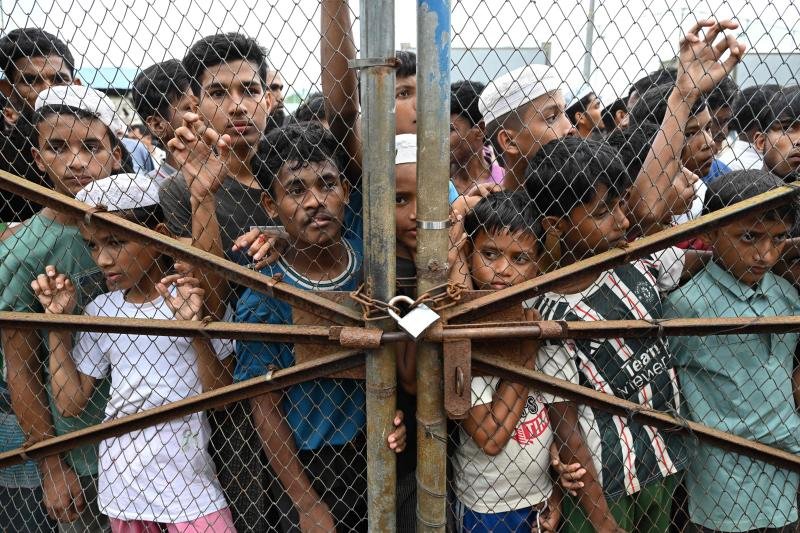
Myanmar guilty of genocide against Rohingya, says top UN court
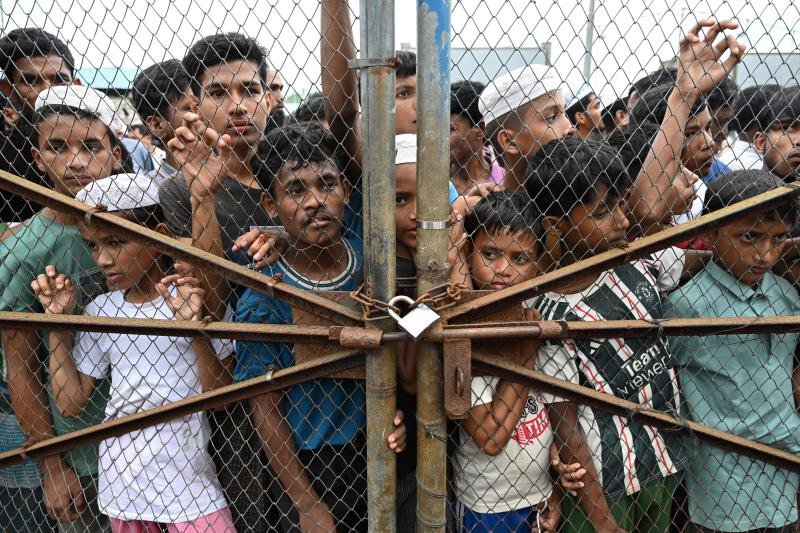
THE HAGUE — Myanmar committed genocide against its Rohingya minority, the International Court of Justice (ICJ) said on Thursday in an historic ruling, ordering refugees be given safe passage home and awarded compensation.
The ruling by the top United Nations (UN) court was the first time in its 80-year history that ICJ judges have determined that a state committed genocide and is likely to be seen as justice for Rohingya victims of Myanmar’s brutal 2017 crackdown.
“The Republic of the Union of Myanmar has committed genocide against the Rohingya group in northern Rakhine State,” said ICJ President Yuji Iwasawa, pronouncing the verdict in the court’s Great Hall of Justice in The Hague.
In Cox’s Bazar, now the world’s biggest refugee camp, hundreds followed proceedings from The Hague on a giant screen, many breaking down in tears when Iwasawa pronounced the verdict of genocide.
Mohammed Osman, whose parents and four siblings were killed by the Myanmar military, said the verdict had proved that “we were not lying about the genocide”.
“I am overwhelmed … But we have achieved only 50% of what we wanted. We will achieve 100% when we are repatriated with dignity,” Osman, 20, told Agence France–Presse (AFP).
For nearly three hours, Iwasawa laid out searing evidence of Myanmar’s atrocities against its mostly Muslim Rohingya minority during the campaign, which forced hundreds of thousands to flee into neighbouring Bangladesh.
Myanmar’s security forces killed thousands of Rohingya civilians, committed “widespread sexual violence” against women and “extreme violence” against children, Iwasawa said.
The ICJ said the evidence pointed to around 10,000 killed in Myanmar’s so-called “clearance operations” to repress the Rohingya community.
Rohingya villages were “systemically destroyed” and replaced with non-Rohingya inhabitants, said the ICJ, ruling that the “only reasonable inference” was that Myanmar intended to destroy the population — a key test for genocide.
‘Safe’ return
The court ordered Myanmar to “allow and facilitate the safe, voluntary, and dignified return to their place of residence” for those who fled the violence. UN chief Antonio Guterres swiftly called on Myanmar to allow that to happen.
Judges also told Myanmar it must investigate and punish anyone suspected of committing genocide, providing for compensation to be determined at a later date.
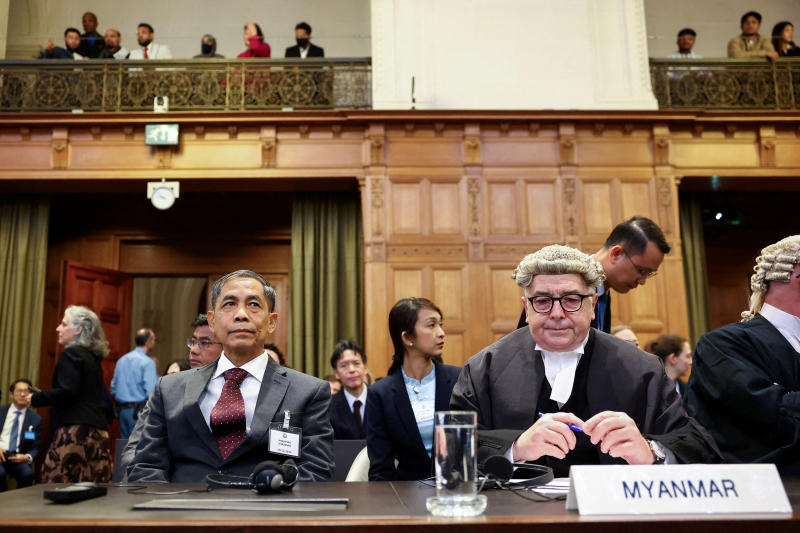
Myanmar’s Union Minister for the Ministry of the President’s Office Ko Ko Hlaing attends a hearing on the day the International Court of Justice (ICJ) delivers its judgment in the case brought by Gambia accusing Myanmar of genocide against the Rohingya Muslim minority, in The Hague, Netherlands, on Nov 19, 2026. (Photo: Reuters)
While the decisions of the ICJ are binding and cannot be appealed, the court has no way of enforcing its verdicts, and it remains to be seen whether Myanmar’s rulers will adhere to the orders.
But the ruling will likely heap more international pressure on its leader Min Aung Hlaing.
He commanded the military during the Rohingya crackdown before ousting the elected government of Aung San Suu Kyi in a 2021 coup.
This year, he was installed as civilian president following deeply restricted elections and is waging a diplomatic campaign for legitimacy — which may be complicated by the ruling.
The diplomatic reverberations were immediate, with Britain saying it would expel Myanmar’s defence attaché in the wake of the verdict.
The watershed ICJ judgment was also being closely watched by legal experts for clues into how the court will rule in another high-profile case before it — whether Israel has committed genocide in Gaza.
The ruling provides “a significant precedent for victims of genocide, and other grave crimes, across the world in their own quest for justice,” said Maria Elena Vignoli, senior international justice counsel at Human Rights Watch.
‘They survived’
The case was brought by The Gambia under the 1948 UN Genocide Convention, which allows any state to bring a case against another it suspects of breaching the international agreement set up after World War II.
The African country’s justice minister told reporters at the court the verdict was a victory for the Rohingya, who had suffered great hardships.
“They survived. They testified. And today, they will believe,” said Dawda Jallow.
Myanmar had always denied genocide, arguing that its actions targeted a military uprising from insurgents after a series of attacks left a dozen security personnel dead.
“Myanmar was not obliged to remain idle and allow terrorists to have free rein,” its representative Ko Ko Hlaing told judges during hearings on the case in January.
There was no immediate reaction from the Myanmar authorities.
A Rohingya activist in Yangon said they were “really satisfied” by the decision but feared potential blowback against the community still in Myanmar.
“Many displaced Rohingya who left Rakhine because of fighting arrived in Yangon and other places in the country. We hope nothing serious happens,” said the activist, who declined to be named for security reasons.
“Everyone wants to live peacefully. We want the world to prevent any genocide here,” the activist added.
UK expels Myanmar’s defence attaché
Britain said on Thursday that it was expelling Myanmar’s defence attaché after the UN highest court ruled that Myanmar committed state-sponsored genocide against the Muslim Rohingya minority population in 2017.
Foreign minister Ed Miliband said his office was also summoning Myanmar’s charge d’affaires “and will set out further action in the coming days to ensure those responsible are held to account”.
“We are taking immediate action today in the light of this judgment … we are ordering the expulsion of the Myanmar defence attache from the UK and calling urgently for a UN security council session to discuss the judgment,” the minister said in a statement.
Source – Bangkok News