
Economist signals risk from oil shortages
Thailand has higher reliance on energy imports than regional peers
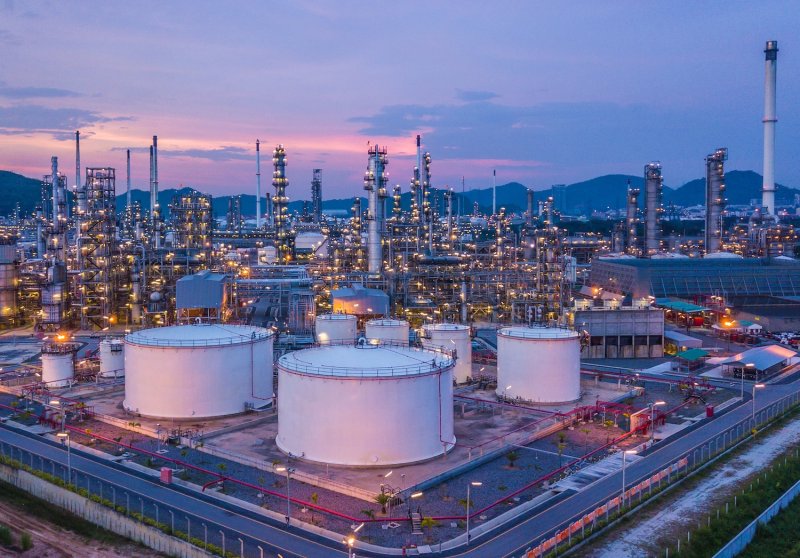
Thailand faces a heightened risk of oil shortages as the country relies more heavily on imported energy than most of its regional peers, according to the research centre of Kiatnakin Phatra Financial Group (KKP).
Energy imports are equivalent to around 6.5% of Thailand’s gross domestic product, which is the highest ratio in the region.
By comparison, net energy imports in Singapore and South Korea are about 4% of GDP, said KKP chief economist Pipat Luengnaruemitchai.
A spike in global oil prices would also push up inflation, as energy has a relatively high weighting in Thailand’s consumer basket, he said.
Higher energy costs in turn would raise living expenses and weaken household purchasing power. Lower-income households would be particularly affected, as they spend a larger share of their income on energy-related costs.
“We expect the government to gradually liberalise energy prices and allow them to move more in line with market mechanisms as fiscal constraints become increasingly tight,” Mr Pipat said on Tuesday.
Shortly after the Middle East war began, the government capped the retail diesel price at 30 baht per litre for 15 days. The true market price is now 48 baht and the high cost of fuel subsidies will soon become untenable.
The government on Tuesday announced modest increases in fuel prices, and Mr Pipat said it needs to continue communicating with the public to prepare for tighter conditions ahead.
The Oil Fuel Fund only recently managed to reduce the debt of 120 billion baht it accumulated during the 2022 oil price crisis after the Russian invasion of Ukraine.
However, the fund is once again facing a subsidy burden of roughly 20 billion baht per month, and the fiscal strain would increase further if oil prices remain high for a prolonged period, noted KKP Research.
Under the baseline scenario, the Middle East conflict is expected to be brief, with oil prices likely to fall back to between $60 and $70 per barrel relatively quickly, said the think-tank.
However, if the conflict escalates into a broader regional war and oil prices stay high for an extended period, or if shortages emerge in energy and other commodities such as fertilisers, the economic impact on Thailand could be far more severe.
KKP Research assesses higher oil prices would affect the Thai economy through the country’s three core growth engines: tourism, exports and domestic consumption.
“If crude oil prices remain above $120 per barrel for six consecutive months, Thailand could face a technical recession, with economic growth slowing to less than 0.7%, while inflation could rise to around 2%,” it said.
NESDC view
The National Economic and Social Development Council (NESDC) has also conducted an analysis of economic impact scenarios, caretaker finance minister Ekniti Nitithanprapas said on Tuesday.
“Initially it assessed a case in which the war could end within one month, estimating that every $10 increase in oil prices would reduce GDP growth by around 0.2 percentage points,” he said.
However, the conflict now shows signs of becoming prolonged and is likely to push global oil prices significantly higher than previously estimated
Danucha Pichayanan, the NESDC secretary-general, said earlier that the agency used two scenarios for its assessment.
In the first, the war ends within one month and the Strait of Hormuz is closed, causing oil prices to rise to $95-105 per barrel, which could reduce Thai economic growth to 1.6% from a projection of 2%.
In the second scenario, the war lasts more than one month and the strait remains closed, disrupting oil shipments and the global supply chain, with oil climbing to $115-125. In this case, Thai GDP growth slows to 1.3% this year.
Source – Bangkok News


