OpenClaw breathes new life into this Chinese tech stock ahead of earnings

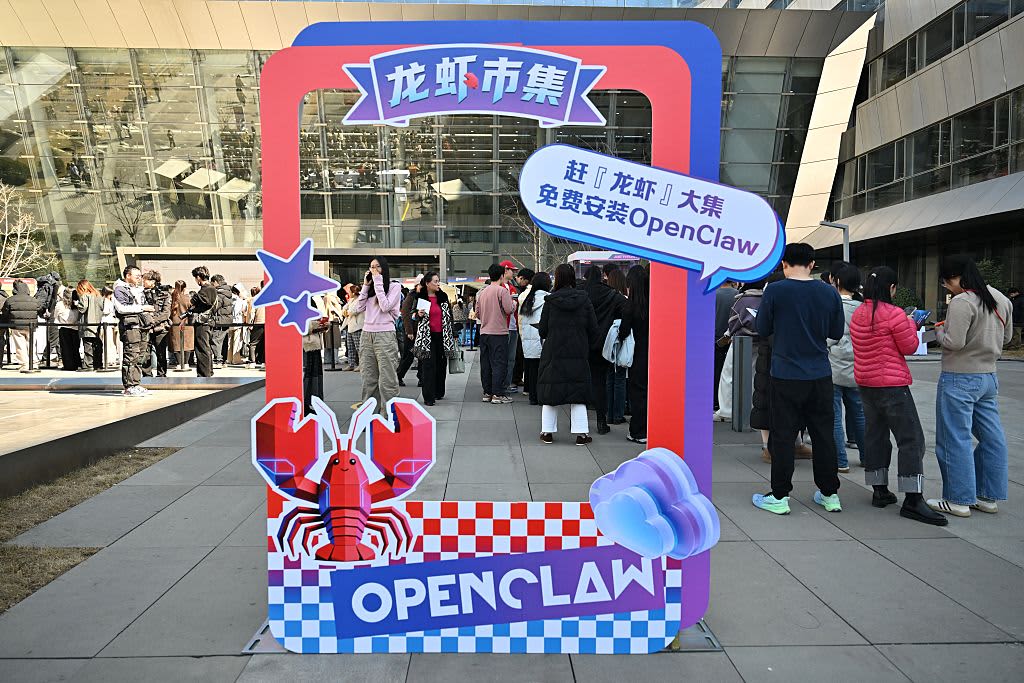
China’s latest wave of interest in OpenClaw is increasing the willingness of price-conscious locals to spend on artificial intelligence tools, potentially boosting AI players in search of a monetization path. In particular, Hong Kong-traded Tencent shares were trending lower to start the year. But news last week that the company was integrating its own version of the popular AI agent across its apps helped the stock recover from nine-month lows. OpenClaw, an AI agent that can assist with personal computing tasks, has quickly become one of the most popular AI tools for people around the world to download and try out, despite the security risks. “Tencent’s AI prospects have been a recent source of investor concern and a factor behind… recent underperformance,” BNP Paribas analyst William Packer wrote in a report Tuesday. “Tencent’s chatbot downloads have lagged Bytedance by a wide margin exacerbating concerns around AI positioning alongside concerns on foundation model quality, chip availability and spend,” he said. “We expect Agentic AI newsflow to prove supportive, demonstrating Tencent’s strong upside potential in the next phase of AI development. BNP rates Tencent outperform, and has a price target of 825 Hong Kong dollars (about $105.38), or upside of more than 50% from Friday’s close. Tencent shares have jumped more than 5% over the last week, compared with Alibaba’s roughly 1.4% gain in Hong Kong trading during that time. Both companies are due to release earnings in the coming week, with Tencent on Wednesday and Alibaba on Thursday. A competition for consumer traffic Earlier this year, Alibaba rolled out AI model releases and integrated several features from food delivery to navigation into its Qwen chatbot . In contrast, the most notable Tencent AI promotions had focused on using their Yuanbao AI app to send red envelopes of money around the Lunar New Year holiday. But in early March, Tencent offered free OpenClaw set-up sessions, drawing hundreds of people in the city of Shenzhen where the company is headquartered. A few days later, Tencent launched several OpenClaw-based tools and app integrations, making it easier for users to access the AI agent’s capabilities. To run, the AI agent still requires connection to an AI model, if not cloud hosting, both of which cost money. “The importance of these moves lies not only in lowering deployment frictions, but also in pushing AI agent closer to end users through messaging and desktop touchpoints within the Tencent ecosystem,” Goldman Sachs analysts said in a March 12 report. “We see Tencent as well-positioned to capture consumer traffic in this round of competition, given its WeChat/QQ/WeCom touchpoints across user base vs. productivity-focused Feishu (ByteDance) and DingTalk (Alibaba) messengers,” the analysts said, referring to popular apps used by businesses in China to manage employee communication and workflow. Goldman has a price target of 644 HKD and rates Tencent a buy. The analysts estimate fourth-quarter revenue grew by 13% from a year ago, on adjusted earnings growth of 16% to 69 billion yuan (about $10 billion). A spotlight on security Companies in China have rushed to tap the OpenClaw craze in the past week by organizing in-person workshops and instructional livestreams. However, China’s regulators have also stepped up warnings on OpenClaw security risks, while some local governments have offered subsidies for entrepreneurs to build businesses using the AI agent. Tencent’s primary version of the AI agent is a standalone desktop app called WorkBuddy . “As Tencent has been putting big emphasis on security, WorkBuddy also comes with enterprise-level security and management,” Citi analysts pointed out in a March 9 report. “We believe this development marks an important milestone for Tencent, providing valuable live scenarios to evaluate the future integration and role of AI agents within its WeChat mini-program ecosystem,” the analysts said. Citi’s analysts have a price target of 783 HKD on Tencent shares. —CNBC’s Michael Bloom contributed to this report.