
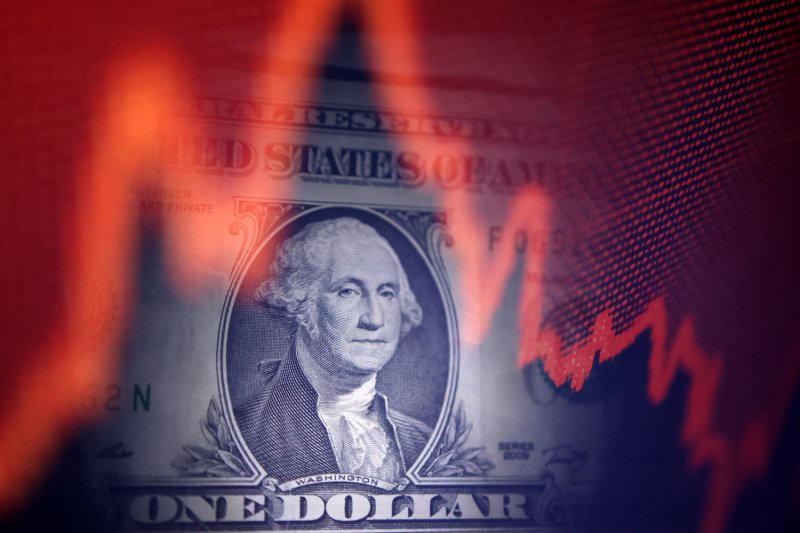
US dollar on course for worst year since 2003
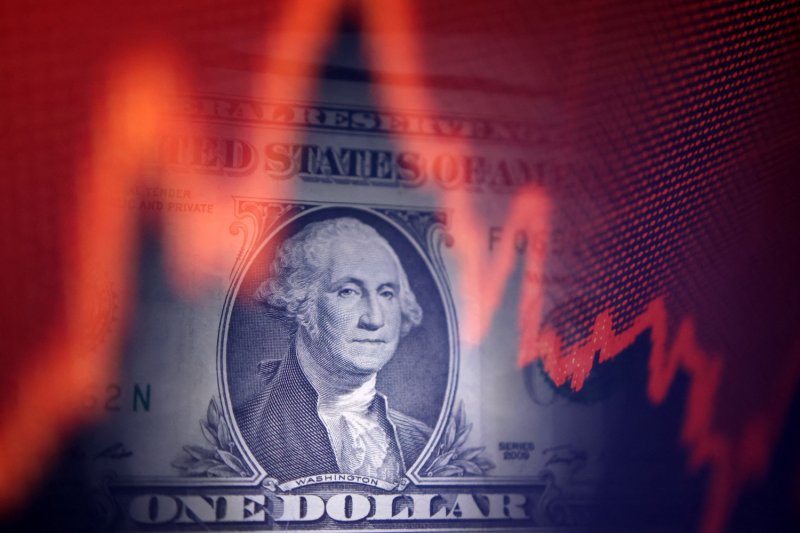
SINGAPORE – The US dollar is headed for its worst annual performance in more than two decades as investors wager that the Federal Reserve will have room to cut interest rates further next year, even as some of its peers look set to start raising them.
The greenback stayed on the back foot in Asian trade on Wednesday, with a solid US economic growth reading failing to move the dial on the rate outlook, leaving investors pricing in roughly two more Fed cuts in 2026.
The first Federal Open Market Committee (FOMC) meeting of 2026 will take place on Jan 27 and 28.
“We expect the FOMC to compromise on two more 25-basis-point cuts to 3-3.25% but see the risks as tilted lower,” said David Mericle, chief US economist at Goldman Sachs, citing slowing inflation as a reason for the forecast.
Against a basket of currencies, the dollar fell to a 10-week low of 97.767, and is on track to lose 9.9% for the year, which would be its steepest annual drop since 2003.
The dollar has had a tumultuous year, whipsawed by President Donald Trump’s chaotic tariff announcements that sparked a crisis of confidence in US assets earlier this year, while his growing influence over the Fed has also raised concerns about the central bank’s independence.
“The US dollar risk premium widened in December which suggests USD weakness may reflect growing concerns around Fed independence, not just the monetary policy outlook,” HSBC analysts said in a currency outlook report.
“With many other G10 central banks on hold, we think Fed liquidity operations and a slight dovish Fed bias leaves the USD outlook tilted to the downside.”
In contrast, the euro, which rose to a three-month high of $1.1806, is up 14% for the year thus far, putting it on track for its best performance since 2003.
The European Central Bank left rates unchanged last week and revised upward some of its growth and inflation projections, in a move that likely closes the door to further easing in the near term.
Traders have since responded by pricing in a slim chance of tighter monetary policy next year, mirroring expectations for Australia and New Zealand, where the next moves are seen as being rate increases.
That has in turn lifted the two Antipodean currencies, with the Australian dollar, up 8.4% to date, scaling a three-month peak of $0.6710 on Wednesday.
The New Zealand dollar similarly touched a 10-week high of $0.58475, having risen 4.5% for the year thus far.
Sterling, meanwhile, was at a three-month peak of $1.3531 and has gained more than 8% for the year. Investors are betting the Bank of England will deliver at least one rate cut in the first half of 2026, and place a roughly 50% chance on a second before the year-end.
Among developing economy currencies in Asia, the Thai baht has surged 10% this year because of dollar weakness, causing major headaches for exporters and policy makers. Some analysts now believe a further rise to around 30 to the dollar is likely.
All eyes on Japan
For now, the main focus for the foreign-exchange market remains on the yen, with traders alert to the possibility of an intervention from Japanese authorities to stem the currency’s slide.
Finance Minister Satsuki Katayama said on Tuesday that Japan has a free hand in dealing with excessive yen moves, issuing the strongest warning to date on Tokyo’s readiness to intervene.
Her remarks arrested the yen’s declines, with the Japanese currency last 0.4% stronger at 155.60 per dollar on Wednesday, having risen more than 0.5% in the previous session.
“Moves that are out of line with any observable fundamentals, and year-end trading conditions are a compelling backdrop for intervention and the risk of action over the holiday season is significant,” said Kit Juckes, chief FX strategist at Societe Generale.
While the Bank of Japan delivered a long-anticipated rate hike on Friday, the move had been well telegraphed and comments from Governor Kazuo Ueda disappointed some in the market who had been betting on a more hawkish tone, leaving the yen sliding in the aftermath.
That has left investors vigilant to official yen-buying from Tokyo, particularly as trading volumes thin toward the year-end, which analysts say would make an opportune time for authorities to strike.
Source – Bangkok News


