Oil shortage hits petrochemical output
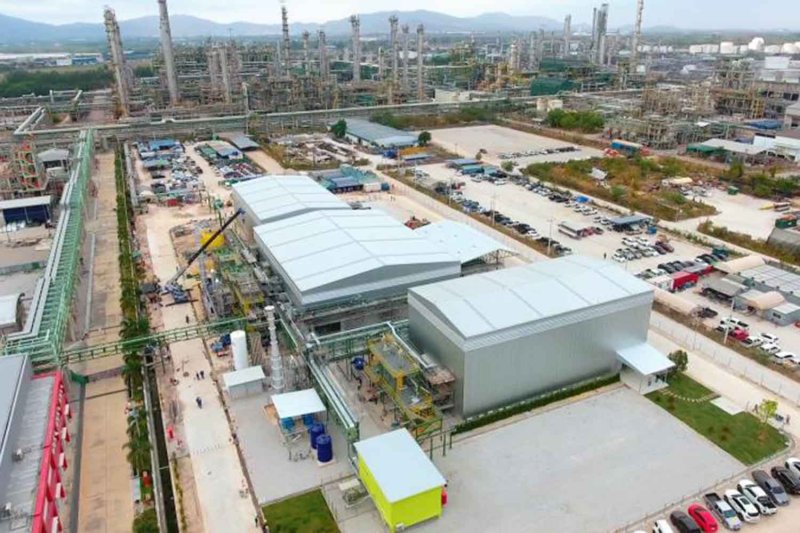
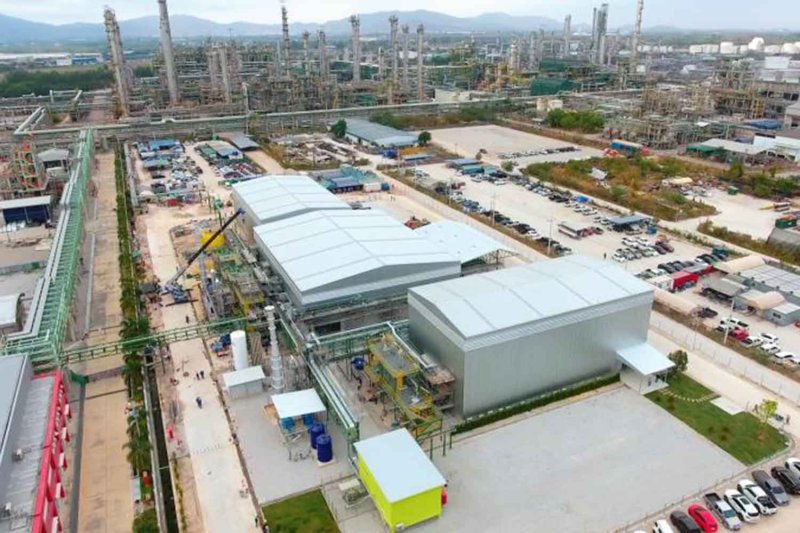
The current “oil shock” has begun to affect companies on the Stock Exchange of Thailand (SET), with industrial conglomerate Siam Cement (SCC) suspending operations at its petrochemical unit in Map Ta Phut due to insufficient feedstock amid the Middle East war, analysts say.
According to Trinity Securities and Liberator Securities, SCC has temporarily halted production at Rayong Olefins (ROC), a subsidiary of SCG Chemicals (SCGC), as problems in the Middle East have affected the transportation of its raw materials.
The conflict in the Middle East has caused a shortfall of roughly 30% of ROC’s raw materials scheduled for March. Typically, the firm imports 70% of its raw materials from the Middle East and purchases the remaining 30% domestically. These imported materials must pass through the Strait of Hormuz, said Liberator.
Although the plant is capable of using natural gas for production, this can only account for 15–20% of ROC’s overall manufacturing, the brokerage said, citing SCC’s recent “quick call” with analysts.
Pichai Lertsupongkit, chief commercial officer at InnovestX Securities, said several oil exporting countries, specifically Kuwait, Iraq and the United Arab Emirates, have cut oil production due to shipping disruptions at the Strait of Hormuz.
An attack by Iran forced Qatar to suspend liquefied natural gas (LNG) production, resulting in a near 20% drop in global LNG supply.
Oil prices have soared by nearly 60% over recent days, with Brent crude now trading at US$111 a barrel, said Mr Pichai.
“Oil prices have continued to jump this week following the 30% increase last week as attacks in the Middle East have escalated,” he said.
Some firms have to suspend their production because they cannot secure an adequate supply of raw materials, Mr Pichai noted.
Sectors adversely affected by the Middle East war include petrochemicals, packaging and plastic. Electronic and automotive component manufacturers have also felt the pinch as they use plastic parts, added Mr Pichai.
Trinity analyst Ekkarin Wongsiri said the most important aspect to monitor is how long the situation in the Strait of Hormuz will last.
If it is resolved within a few weeks, the impact will be only a temporary operational disruption. However, if it drags on to the middle of next month or beyond, the risk of further disruptions to cracker services in both in Thailand and Vietnam will rise significantly, he said.
Source – Bangkok News