
Boeing and Airbus prepare for next narrow-body battle – but airlines aren’t pushing for new jets yet
Boeing and Airbus are starting to map out the next generation of narrow-body aircraft, but the world’s two dominant planemakers say their airline customers are more concerned with getting today’s jets delivered than pressing for all-new models.
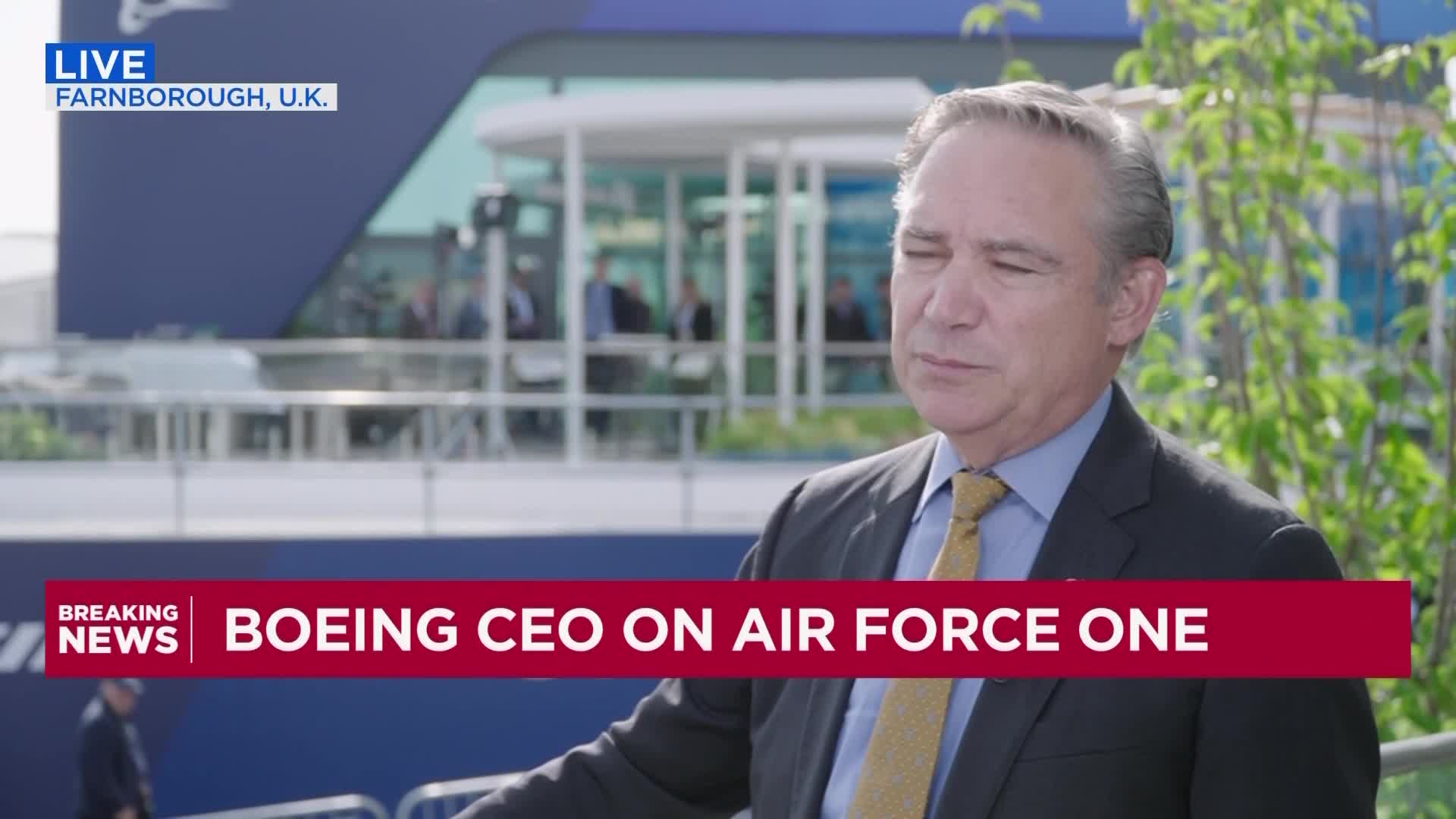
Boeing CEO Kelly Ortberg said Monday that the company still needs “a couple more years” to put its finances in a position to support a new commercial aircraft program.
Airbus CEO Guillaume Faury, meanwhile, said the European manufacturer is targeting the launch of a next-generation single-aisle program around 2030, with entry into service in the second half of the following decade.
While the two CEOs struck different tones, they pointed to broadly similar timeframes.
Airbus has publicly attached a target year to launch its next aircraft. Boeing is indicating that it could be financially capable of moving on a similar horizon, while preserving the option to wait if the technology or market case is not strong enough.
“We think about three things that have to happen,” Ortberg told CNBC’s Phil LeBeau. “First of all, we have to be ready, and part of that is getting our financial house in order, and we’re working on that. It’s going to take a couple more years to get where we want to be.”

The technology also has to be ready, he said, and airline customers must be ready to move on from Boeing’s current product line.
“The market’s got to be ready. Right now, the customers are telling me, ‘focus on your existing product line, we really want to see better maturity of the existing product line before we move to a new airplane.'”
It comes as aircraft manufacturers experience persistent production bottlenecks across the industry. Boeing is trying to increase 737 Max output and is still reeling from a series of production and quality issues and a near-catastrophic blowout of a fuselage door plug in January 2024.
Airbus has said engine availability, particularly from Pratt & Whitney, forced it to adjust production plans for this year and next, although Faury said the situation had stabilized.
Faury said Airbus is focused on ramping production and delivering aircraft already on order even as it prepares its next generation of commercial aircraft.
“We’re a long-term industry,” Faury said. “It takes time to prepare the technologies, to launch a program for the product, for the production system, [to] enter into service with the certification, do the ramp up.”

Faury said Airbus is preparing its next-generation single-aisle aircraft and wants to maintain its lead in that market. The company is targeting a program launch around 2030 and entry into service in the second half of the 2030s.
For both manufacturers, however, increasing production and delivering existing orders remain the more immediate tasks.
Aircraft deliveries in focus
RBC Capital Markets analysts said last week that investors are focused on Boeing’s ability to increase production of the 737 Max and 787, complete certification of the Max 7 and Max 10, improve margins, and generate cash.
“The primary focus for investors will remain on the state of the supply chain and delivery schedules,” the analysts wrote in a note to clients.
The same appears to be true for Airbus. RBC said investors were looking for a clearer path to Airbus’s A320 and A350 production goals after the company’s stronger second-quarter deliveries boosted confidence in its full-year target.
Airbus has a backlog of over 9,000 aircraft, and demand continues to outpace available supply. Airbus booked 51 A320neo orders in June, while second-quarter delivery growth was driven almost entirely by the A320 family, according to Jefferies analysts.
Jefferies said Airbus’s growing delivery volume of A320-family aircraft – 190 in the second quarter – is expected to drive a significant improvement in earnings. Airbus reports deliveries on a monthly basis and will publish its quarterly earnings report next week.
At Boeing, the focus remains on completing the current 737 Max family.
Jefferies said on Sunday that certification work on the 737 Max-7 and Max-10 was 95% and 98% complete, respectively. The Max-10 had 1,533 aircraft on order, accounting for roughly a third of Boeing’s 737 backlog.
Ortberg said on Monday that the 737 Max-7 certification with the FAA is expected “very shortly” and would mark a critical milestone, as it would be the first new airplane the FAA has certified in a long time.
Boeing has also invested about $1 billion in a fourth 737 Max production line in Everett, Washington, which will eventually allow the company to raise production beyond the capacity of its three existing Renton lines.
That suggests investors and airline customers are broadly aligned: both want the manufacturers to execute on the aircraft already promised.
While both Boeing and Airbus work through large order backlogs and production constraints, airlines continue to add capacity using existing aircraft models.
Ryanair, Boeing’s largest customer outside of the U.S., Chief Financial Officer Neil Sorahan said Monday that the delivery of the last aircraft in its current order of Boeing 737 Max 8-200 jets helped Ryanair expand its fleet to just under 650 aircraft and grow first-quarter traffic by 6%.
The airline expects passenger numbers to grow about 4% this year to 216 million, Sorahan told CNBC’s “Squawk Box.”

While neither manufacturer appears to be under intense pressure from customers to move faster, work on the next-generation aircraft continues.
The eventual successors to Boeing’s 737 Max and Airbus’ A320neo families may shape competition in the industry’s largest commercial aircraft market for decades. But before Boeing and Airbus compete over tomorrow’s narrow-body aircraft, both still have to deliver on today’s orders.
Source – CNBC