
Nasdaq rebounds 1% following worst session in 18 months as traders snap up tech shares: Live updates

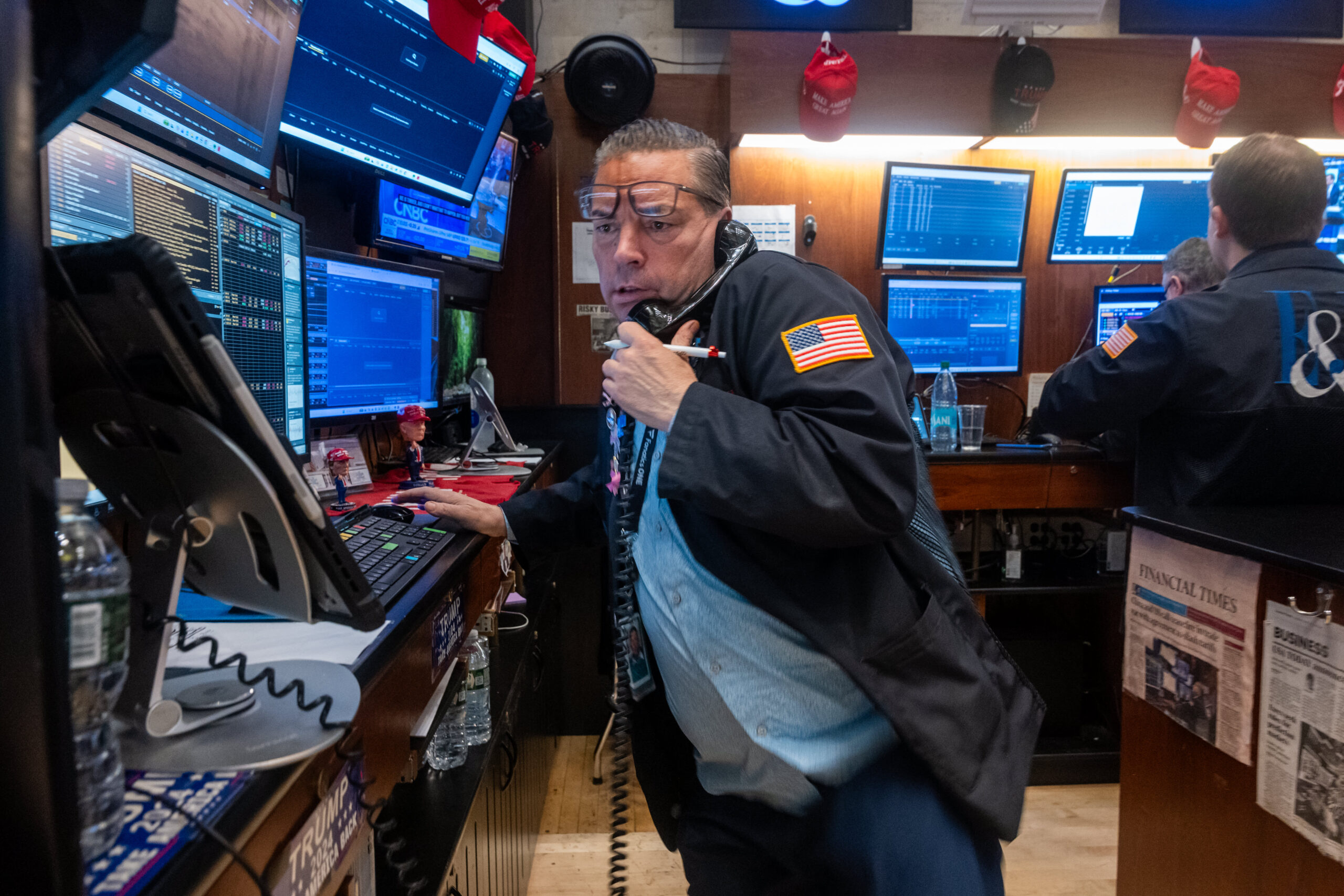
Traders work on the floor of the New York Stock Exchange (NYSE) on November 06, 2026 in New York City.
Spencer Platt | Getty Images
The Nasdaq Composite rebounded on Friday as some investors bought the dip in chip stocks following a punishing sell-off that sent the index into correction territory.
The tech-heavy Nasdaq bounced 1.09% to close at 24,579.42. The S&P 500 rose 0.31% to end at 7,376.86, while the Dow Jones Industrial Average lost 237.33 points, or 0.46%, and settled at 51,285.73.
Worries of a potential slowdown in data center construction following big Democratic wins in the House and Senate and key state governorships hit U.S. markets hard on Thursday.
The heavy selling on Thursday sent the three major stock averages to their worst one-day losses since April 2025. The Nasdaq Composite tumbled 5.5%, closing more than 10% below its most recent high and putting it in what Wall Street regards as a correction. The broad-market S&P 500 lost 4.4%, while the Dow fell more than 1,800 points, or 3.4%.
All 11 sectors in the S&P 500 closed lower that day, but shares of companies tied to the AI buildout led the decline.
During Friday’s session, shares of Micron Technology were up 5% following a 17% decline on Thursday. Nvidia was nearly 3% higher after a 9% rout the day before and moved back into positive territory for the year.
“The scale of the falls in some of the market’s biggest names has been striking. But it also highlights the concentration risk that has built up in U.S. equity markets,” Stuart Clark, portfolio manager at Quilter, said by email.
“With a relatively small number of technology and semiconductor stocks now carrying so much weight, weakness in those names quickly translates into sizeable falls for the Nasdaq and S&P 500.”
The “Magnificent Seven” stocks shed $1 trillion in total market capitalization on Thursday alone. Along with Nvidia, Tesla, Meta Platforms and Alphabet saw gains Friday.
Top Democrats have called for the curbing of the data center buildout since the party’s big election win. Governor-Elect Gina Hinojosa of Texas — a key data center hub in the country — said in a CNN interview Thursday evening, “We will have laws to protect Texans, and we need to stop what we are doing with data centers until we have those protections.”
Investors’ fears will likely persist given that Hinojosa and others are not slated to take office until January, according to Chris Grisanti of MAI Capital Management. However, the chief market strategist is still optimistic on AI, as he believes that the deals related to the buildout will eventually get done.
“While there’s definitely more of a headwind now after the election, this is an industrial revolution akin to railroads, akin to internet, and it’s not going to stop,” he said. “I don’t think we’re at the bottom, but I think you can see it from here.”
Friday’s relatively upbeat sentiment was kept in check after people familiar with the matter told CNBC that Microsoft is planning to reduce the number of neocloud partners.
Investors were also reacting to the latest nonfarm payrolls report, which came in much better than expected at an increase of 165,000 in October. That was well above the 59,000 that economists polled by Dow Jones had anticipated. The unemployment rate also moved down to 4.1%. Economists had expected it to hold steady at 4.2%.
All three major averages posted losses on the week, even after Wednesday’s big rally in the wake of the election. The Nasdaq lost 3.4% and the S&P 500 dropped 2.7%. The 30-stock Dow was the outperformer, sliding 0.9%.
Looking at the history of Nasdaq corrections shows tech stocks often find their footing over the next three-to-six months, but trading can remain rocky in the near term.
Source – Middle east monitor