
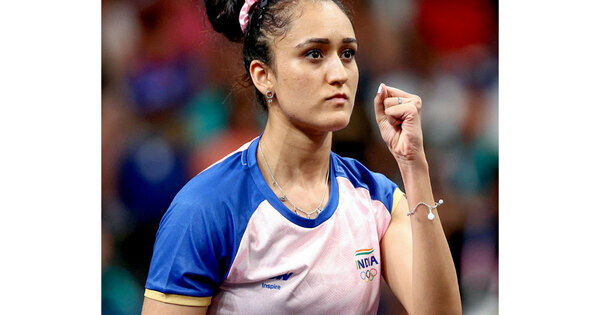
“No specific reason communicated”: Table Tennis star Manika Batra breaks silence after Asian Games squad exclusion
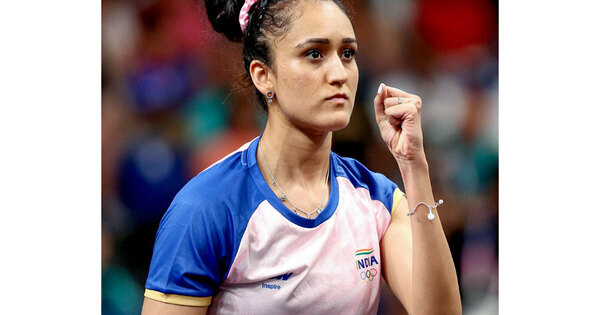
New Delhi [India], June 24 (ANI): Indian women’s table tennis star Manika Batra has expressed strong concerns over her exclusion from India’s main squad for the upcoming Asian Games, saying she is not seeking selection but demanding transparency and clear reasons behind the decision.
The 31-year-old Olympian was named among the reserves when the Table Tennis Federation of India (TTFI) announced a 10-member contingent for the Aichi-Nagoya Asian Games.
In a detailed statement after her exclusion from the main squad, Manika said she has spent two decades representing India at the highest level and has accepted both victories and setbacks as part of the sport, but questioned what she described as a lack of clarity in the selection process.
‘For the past two decades, I have had the privilege of representing India at the highest level. Throughout my career, I have accepted victories, defeats, selections, and non-selections. That is a part of table tennis. However, what I find difficult to accept is a lack of clarity and arbitrariness. Over the last few days, I have seen many people say that I am seeking a place in the Asian Games team or that I am asking for special consideration. Let me state this clearly. I am not asking to be selected. I am not asking anyone to overturn the decision. I am asking for answers. No specific reason for my non-selection has been communicated to me,’ she said.
She also raised questions over the ranking criteria used for selection, pointing out fluctuations in international rankings and asking what time period was considered during evaluation.
‘I am currently World No. 51. Rankings in table tennis are updated every week and operate on a rolling points system. That naturally raises important questions. What timeline was considered while evaluating rankings? Was the assessment based on the previous 12 months, six months, the previous two months, or a single weekly ranking snapshot?’ she added.
Manika further stressed that recent form and wins against top international opponents should also be taken into account in selection decisions.
‘If an athlete who has consistently been around the Top 50 moves from 50 to 51 over a week or two, does that suddenly make her ineligible? These are questions that deserve clear answers. My performances this season have been strong. I have recorded victories against top Asian players and highly-rated Chinese opponents. I believe current form and performance should also be part of the evaluation process. Current form is something even the Ministry of Youth Affairs and Sports directs, should be considered when selecting players/teams for the Asian Games,’ Batra said.
She also highlighted the challenges faced by international players in balancing global tournaments with domestic commitments.
‘There has also been discussion around national ranking and domestic tournaments. I have immense respect for national events and have always been proud to compete in them. But athletes competing regularly on the international circuit often have to manage an intense global calendar, recovery periods, travel,visa processing and preparation for major events. Domestic participation cannot be viewed in isolation from international commitments,’ she said.
Referring to other exclusions, she said, ‘I am also surprised to see players with proven records for India being left out. Athletes who have delivered medals and results for the country, deserve to know how such decisions were reached. Take the example of Ayhika Mukherjee, who was part of India’s historic women’s doubles medal at the last Asian Games. When athletes with such achievements are left out, it naturally raises questions about the criteria and evaluation process that led to these decisions.’
Manika also raised concerns about the selection process structure, saying, ‘I have been informed that the final selection involved a voting process. If that is true, then I believe athletes have a right to know who made those decisions and on what basis. What were the reasons? Were they documented? Were they communicated? Were conflict of interests disclosed?’
She further questioned safeguards in a voting-based system and sought clarity on selectors’ credentials.
‘Can any system that relies on voting be completely free from bias, personal opinions, or past differences? If so, what safeguards exist to ensure fairness and accountability? I also believe athletes have a right to know who is making these decisions and what qualifications or experience they bring to the selection process. How many members of the Selection Committee have represented India internationally? How many have competed at the Olympic Games, Commonwealth Games, Asian Games, or at the highest levels of table tennis?’
Concluding her statement, she reiterated that her demand is only for transparency.
‘Not because I want a place in the team. Not because I want special treatment. But because I believe every athlete deserves transparency, consistency, and accountability in the selection process. I have represented India with pride for almost twenty years, and all I am asking for today is a fair and honest explanation. And just to be absolutely clear once again — I am asking questions, not special consideration.’
One of India’s most decorated table tennis players, Batra played a key role in the country’s breakthrough Asian Games success. Alongside Sharath Kamal, she won mixed doubles bronze at the Jakarta 2018 Asian Games.
India’s other table tennis medals at the continental showpiece include the men’s team bronze in 2018 and the women’s doubles bronze secured by Sutirtha Mukherjee and Ayhika Mukherjee at Hangzhou 2023.
The table tennis competition at the Aichi-Nagoya Asian Games is scheduled to take place from September 20 to 28. (ANI)
Source – Indonesia News