S&P 500 rises 1% as AI-related stocks surge, oil and yields slide: Live updates

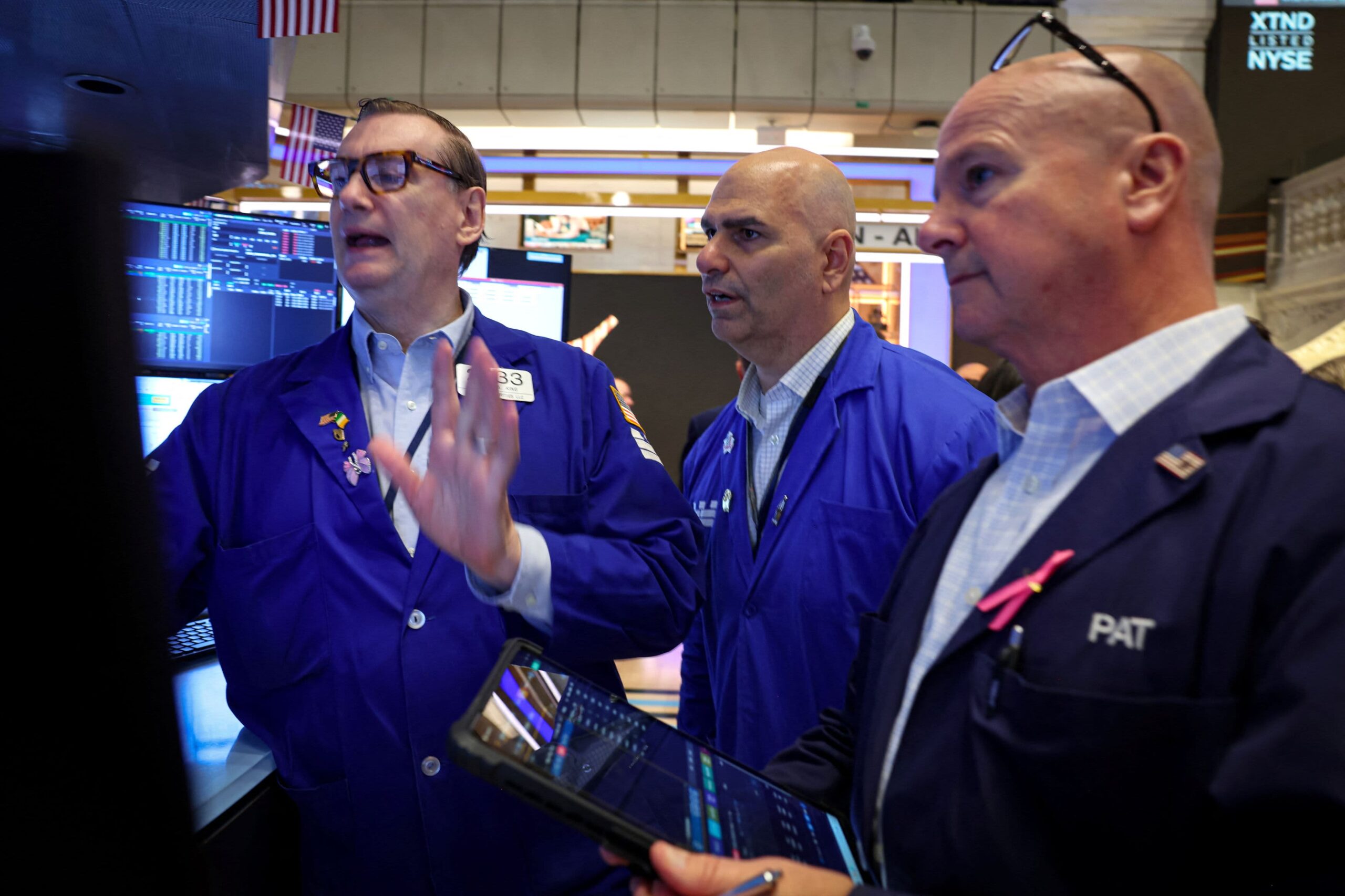
Traders work on the floor at the New York Stock Exchange in New York, Sept. 8, 2026.
Brendan McDermid | Reuters
U.S. stocks rose on Monday as key technology names advanced and oil prices and Treasury yields slipped, with Wall Street looking to recover from a mostly lower week.
The S&P 500 climbed 1.2%, while the Nasdaq Composite gained 1.8%. The Dow Jones Industrial Average added 243 points, or 0.5%.
The broader market was supported by a rise in artificial intelligence-related stocks. Shares of Intel popped 13%, while Advanced Micro Devices added 9% and hit $1 trillion in market cap. Others such as Qualcomm increased 6%.
Last week, the Dow slid 1.7% for its worst performance since March. The S&P 500 was off about 0.1%. Only the tech-heavy Nasdaq posted a gain, up 0.7%.
Monday’s advance was also aided by a 5% drop in U.S. crude to above $95 per barrel. International benchmark Brent slid 3% as well to above $100 a barrel.
Those moves come after the latest escalation in hostilities in the Middle East over the weekend. Iran-backed Houthis said they attacked Saudi Arabia with missiles and drones on Saturday. Later in the day, the U.S. State Department warned Americans to reconsider traveling to the Middle East as the U.S. and Iran traded threats to resume attacks.
However, diplomacy between the U.S. and Iran could still be on the table in the near term, as President Donald Trump told Fox News he would probably be open to meeting with Iranian President Masoud Pezeshkian during this week’s UN General Assembly.
Treasury yields declined alongside the fall in oil. The 10-year Treasury note yield shed more than 3 basis points to 4.959%, as did the yield on the 30-year Treasury bond to 5.295%.
As the U.S. struggles with taming sticky inflation and elevated bond yields, the Federal Reserve hiked interest rates last week for the first time in three years.
“Higher-for-longer energy prices add to the case for further tightening,” wrote Ed Yardeni, president of Yardeni Research, in a Monday note.
He also pointed out that the risks to supply are “not going away,” saying that the Middle East conflict “continues to threaten oil production and shipping, while Ukrainian strikes on Russian refineries and sanctions on Russia are further constraining global fuel supplies.”
“The longer this energy shock persists, the greater the risk of second-round inflation effects,” he continued.
That could heighten the significance of a key summit this week between U.S. President Donald Trump and Chinese President Xi Jinping, which will cover AI, tariffs and critical minerals, among other economic issues. Treasury Secretary Scott Bessent met with Chinese Vice Premier He Lifeng ahead of the visit.
“The same geopolitical conflict inflating energy prices is also what’s keeping the [Federal Reserve] hawkish and what’s squeezing Chinese refiners,” wrote Jeffrey Roach, chief economist at LPL Financial. Fed Chairman Kevin Warsh’s committee “has conditioned its inflation outlook on oil markets settling down, and Beijing’s fiscal calculus runs through the same variable.”
Source – Middle east monitor