Trump threatens ‘Economic D-Day’ for Iran and ‘tremendous’ consequences for its backers
US President Donald Trump delivers remarks during a meeting with cryptocurrency executives in the Roosevelt Room of the White House in Washington, DC, on Aug. 19, 2026.
Jim Watson | AFP | Getty Images
President Donald Trump said the U.S. will launch what he called the “most crushing economic operation ever taken against any country” against Iran, threatening severe financial penalties on any nation that helps Tehran evade sanctions.
In a Truth Social post, Trump said that “this will be Economic Warfare and Isolation on an unprecedented scale.”
“No one has given the Islamic Republic of Iran a greater opportunity to make a Deal than me,” and that “TRAGICALLY, for them, they have failed to take it,” the president said.
Iran’s navy, air force and military production facilities have been destroyed and its currency rendered worthless, Trump said, arguing the regime is “hanging by a thread.”
He said any country whose financial institutions, businesses, airports, or government entities offer Iran a “lifeline” will face what he described as tremendous economic consequences of their own.
The president named oil smuggling, currency swap lines, cash transfers, exchange houses, ship registries and front companies as channels he wants shut down immediately, stressing that Iran will never be permitted to acquire a nuclear weapon.
“It all needs to stop NOW. You know who you are,” Trump said of those who continue to trade with or maintain economic ties with Iran. “This will be an ECONOMIC D-DAY, and we need all of our Allies to stand with the United States of America to isolate, and defeat, the Iran threat.”
Trump said in his post that Iran was already “on the ropes.”
The announcement extends a pressure campaign the Trump administration has waged since April under the banner Operation Economic Fury, aimed at cutting off what it terms the regime’s global terror financing and revenue streams.
Iran accuses the U.S. of ‘economic terrorism’
Iran’s foreign minister, Abbas Araghchi, rejected Trump’s “Economic D-Day” threat, saying it was a diversion from America’s own crisis of mounting debt and rising interest costs
“Doubling down on failed policies will only bring further defeat—and enmity of Iranians,” Araghchi said in a post on X on Thursday. He also accused the U.S. of “economic terrorism,” warning that the campaign threatens the broader global economy and the sovereignty of countries beyond Iran.
Araghchi has previously accused Washington of escalating sanctions each time earlier rounds failed to change Tehran’s position, calling the approach a barrier to any negotiated exit from the six-month conflict.
Meanwhile, Iran’s deputy foreign minister, Kazem Gharibabadi, said in a post on X on Thursday that “the military war didn’t yield results, so now they’ve named the next failure ‘economic war.'”
Gharibabadi denied that Iran’s economy is on the brink of collapse.
Asked about the “Economic D-Day” plans at a news conference on Thursday, Chinese Foreign Ministry spokesperson Lin Jian said that imposing sanctions and economic pressure would “not help to solve the issue.”
“China calls on relevant parties to take responsible measures and resolve problems through diplomatic and political means,” he said.
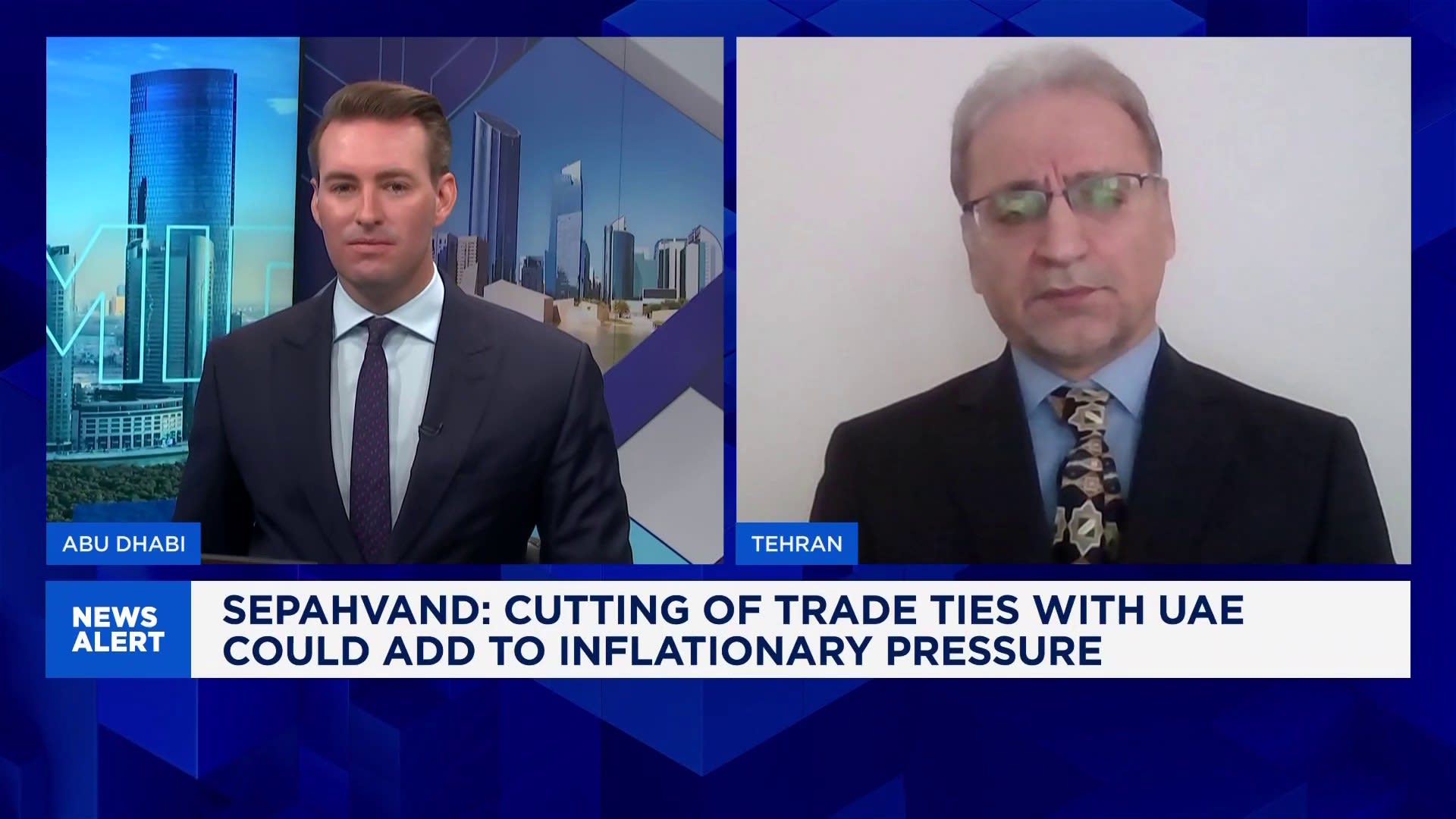
Mehrdad Sepahvand, a former economic advisor to the Central Bank of Iran, told CNBC’s “Access Middle East” on Thursday that Iran’s economy has proven resilient throughout the almost six-month war with the United States.
“Despite high inflation and recessionary conditions, shops are still full of food and basic goods, and there is no sign of panic buying goods on a large scale, despite serious imbalances in the banking system and even severe cyberattacks, public confidence in the banking system has not collapsed, and we have not seen any major run on banks,” he said.
“And although hope has clearly weakened, it has not completely disappeared — so the situation is not as bad as we imagine.”

Sepahvand added that Iran’s geography makes it difficult for the U.S. to destroy its economy.
“Iran is a large country with vast natural resources and climate diversity. It also has long land and maritime borders and a strategic location in the region that makes it almost impossible for any outside force to completely cut off the country from the world and suffocate the economy,” he said.
“Bear in mind that for a long time we have been [under] different forms of sanctions. So over time, the economy has developed its own way of adapting to sanctions and operating under pressure.”
While sanctions are damaging to the Iranian economy, Sepahvand said observers should be a “little bit cautious about the view that the Iranian economy is on the verge of collapse.”
Trade suspension
The escalation comes a day after the United Arab Emirates — one of the most important commercial partners for Iran — suspended all trade and financial dealings with Tehran, following what it said were two Iranian ballistic missiles fired at the Gulf state. Iran denied launching the missiles, calling the claim a “false flag.” Before the war, the UAE was Iran’s largest source of imports, supplying more than 30% of the country’s total imports in 2024, according to the World Trade Organization.
But Washington’s ultimate leverage question runs through China, which has by far the deepest financial, logistical and trade linkages to Iran, said Bob McNally, president of Rapidan Energy Group, noting that Beijing has already shown its willingness to retaliate.

The crude markets are likely to stay largely unmoved by the sanctions threat itself unless Iran’s hard-line leaders respond by escalating militarily, McNally said on CNBC’s “Squawk Box Asia” on Thursday.
“The [crude] market is becoming a little less optimistic about this near-term and sustainable reopening of Hormuz,” said McNally.
Ship transits through the Strait of Hormuz continued to run well below prewar norms last week, as Iran’s targeting of vessels and the U.S. naval blockade of Iranian ports kept most operators away from the choke point, according to Lloyd’s List Intelligence.
Preliminary data show 73 transits during the week ended on Aug.16, down from 91 the previous week, the shipping data provider said, with a small core group of operators remaining active.
Brent crude futures rose 0.5% to $92.09 per barrel on Thursday, and U.S. West Texas Intermediate crude gained 0.3% to $86.07 a barrel.
U.S. stock futures pared earlier gains following Trump’s announcement, with S&P 500 futures nearly flat.
Source – Middle east monitor