

UNIFIL is leaving. Who will protect Lebanon?
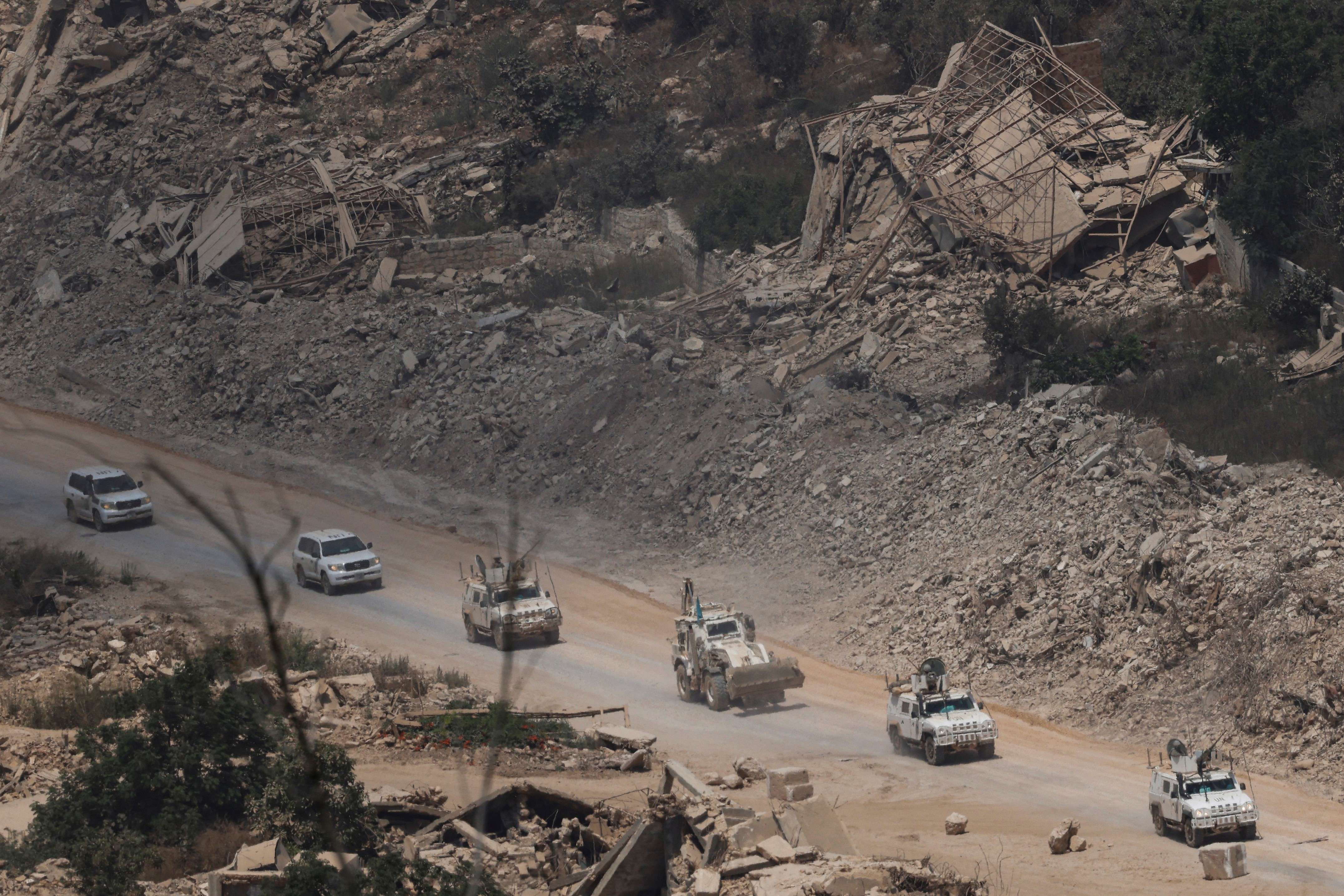

For almost five decades, UN peacekeepers have patrolled southern Lebanon, one of the most dangerous and sensitive borders in the Middle East. They have witnessed wars, political crises, the rise of Hezbollah and repeated attempts to bring stability to a region that has rarely known lasting peace.
Now, the UN Interim Force in Lebanon is preparing to leave. Its operations are scheduled to end on Dec. 31, 2026, followed by a gradual withdrawal during 2027.
The decision raises a troubling question: Is the international community leaving the door open for Hezbollah to rebuild its military strength and influence?
The answer matters not only to Lebanon, but also to Israel. Without a credible security arrangement to replace UNIFIL, southern Lebanon could once again become a launching ground for attacks against Israel, bringing another devastating conflict to a country that can barely afford to recover from the last one.
The danger is not simply that peacekeepers are leaving. It is that they may leave before the Lebanese state can prevent Hezbollah from rebuilding its military presence.
A weakened Hezbollah is not necessarily a defeated Hezbollah.
Dalia Al-Aqidi
The UN Security Council established UNIFIL in 1978 to help restore security in southern Lebanon and support the Lebanese government’s authority. Following the 2006 war between Israel and Hezbollah, UN Security Council Resolution 1701 expanded its mission and called for an area between the Blue Line and the Litani River free of armed groups other than the Lebanese military and UNIFIL.
Yet the years that followed exposed the limitations of international peacekeeping. Despite the presence of thousands of UN soldiers, Hezbollah built a vast military arsenal, developed networks of underground facilities and established positions that threatened Israeli communities across the border.
The Iran-backed militia did not merely challenge Israel. It also undermined Lebanon’s sovereignty by maintaining an independent military force capable of making decisions about war and peace without the consent of the Lebanese people.
This is the central problem that UNIFIL’s withdrawal will leave unresolved.
It would be unfair to blame the peacekeepers alone for failing to disarm Hezbollah. The international force was not created to fight a war against the organization. Its mandate depended on cooperation with the Lebanese authorities, and its ability to enforce restrictions was limited.
The international community must ensure that Lebanon’s army can assume responsibility before the peacekeepers depart.
Dalia Al-Aqidi
Nevertheless, its presence provided international monitoring, communication channels and a measure of stability along the border. Removing those functions without an effective replacement would be a serious mistake.
The security implications are serious for both Lebanon and Israel. Communities on both sides of the border have endured years of violence, displacement and uncertainty. Any attempt by Hezbollah to rebuild its military presence in southern Lebanon could increase tensions and raise the risk of another confrontation.
Both countries must protect their populations and prevent further escalation. For Lebanon, this means ensuring that armed groups operating outside the state’s authority do not use its territory. For Israel, it means protecting its border communities from renewed attacks.
The future of southern Lebanon therefore remains a serious concern, with the security of civilians on both sides depending on a stable and lasting arrangement.
Hezbollah has suffered significant military setbacks, but losing weapons, commanders and military positions does not necessarily mean it has lost the ability to recover. It still has political influence, local networks and supporters who could help it rebuild over time.
A weakened Hezbollah is not necessarily a defeated Hezbollah.
If the Lebanese army cannot establish effective control over the south, Hezbollah could gradually restore its presence, move weapons into sensitive areas and attempt to recover the military capabilities it has lost.
Such a development would place Lebanon and Israel on a dangerous path toward another confrontation.
For Lebanese civilians, the consequences would be devastating. Every new conflict threatens homes, businesses, infrastructure and the country’s already struggling economy. The Lebanese people should not have to endure another war because Hezbollah insists on maintaining its own military force.
Recent developments make these concerns particularly urgent.
On Oct. 15, Hezbollah acknowledged ownership of hundreds of kilograms of explosives seized by Lebanese security forces. The group claimed they were intended for use against Israeli troops and demanded their return. The incident exposed the continuing struggle between the Lebanese government and Hezbollah over control of weapons.
It also raises a troubling question: If Hezbollah continues to move explosives despite government restrictions, what guarantees will exist when international peacekeepers are no longer patrolling the south?
Lebanese President Joseph Aoun and Prime Minister Nawaf Salam have made efforts to strengthen state authority and limit Hezbollah’s military activities. These steps deserve international support, but political declarations alone will not be enough.
The Lebanese Armed Forces need the resources, equipment, and political backing to control the country’s territory and prevent armed groups from operating independently.
Encouraging signs of international involvement are emerging. On Oct. 12, the EU approved a new three-year mission to advise and train Lebanon’s armed forces and internal security services, focusing on border security, surveillance and combating smuggling. Although the mission has not yet begun operations, it represents an important step toward strengthening Lebanon’s security institutions.
This is a positive development, but training alone cannot replace UNIFIL’s monitoring and communication functions.
The international community must ensure that Lebanon’s army can assume responsibility before the peacekeepers depart. That requires sustained financial assistance, better intelligence cooperation, effective border monitoring and clear arrangements to prevent renewed hostilities.
It also requires political courage in Beirut.
For too long, Hezbollah has operated as a state within a state, maintaining its own weapons and making military decisions with consequences for millions of Lebanese citizens.
Lebanon cannot establish genuine sovereignty while an armed organization retains the power to involve the country in war.
Israel also cannot be expected to ignore the rebuilding of a hostile military force along its northern border.
The objective should be a southern Lebanon controlled by the Lebanese army, free of unauthorized weapons and no longer used as a battlefield for Hezbollah’s regional ambitions.
UNIFIL’s departure could provide an opportunity to achieve that goal, but only if the transition is carefully managed.
After almost five decades of peacekeeping, Lebanon cannot afford another failed international mission. UNIFIL’s departure must not become an invitation for Hezbollah to rebuild its military power and drag the region into another war.
The international community has a responsibility to prevent that outcome. If it fails, civilians in both Lebanon and Israel will pay the price.
The real question is not who will replace UNIFIL, but whether Lebanon will finally control its own future or once again be forced to surrender it to Hezbollah.
Source – Arab News